Dental FAQs
- ★ 700+ Five-Star Google & Yelp Reviews
- ✓ USC-Trained & FICOI-Credentialed Dentist
- ✓ Bilingual Team, Se Habla Español
- ✓ Most PPO Insurance Accepted
- ✓ Same-Day & Emergency Appointments
★★★★★
4.9
Google Rating
★★★★★
700+
Five-Star Reviews on Google & Yelp
20+
Years in NoHo
USC
School of Dentistry
FICOI Fellow
International Congress of Oral Implantologists
Same Day
Appointments: Book Here
Treatment Comparison
| Treatment | Recovery Time | Sedation Available |
Longevity | Starting Cost |
| Dental Implants | 3–7 days initial / 3–6 months osseointegration | Yes | 20+ years (lifetime) | From $2,799 |
| All-on-4 | Same-day teeth / 3–6 months final | Yes | 15–20+ years | From $16,000 |
| Porcelain Veneers | Minimal (2 visits) | Optional | 10–15 years | Contact for quote |
| Invisalign | No downtime | No | Long-term with retainers | From $2,495 |
| Wisdom Tooth Removal | 3–7 days | Yes | Permanent | From $499 |
| Root Canal | 1–2 days | Yes | Long-term with crown | From $895 (front tooth), from $1,400 (premolar or molar); excludes buildup and crown |
Cost Reference Guide
| Treatment | Estimated Cost | Insurance Coverage | Financing Available |
| New Patient Exam & X-Rays | $79 (special) | May apply | Yes |
| Dental Cleaning | Contact office | Often covered 100% | Yes |
| Tooth-Colored Filling | Contact office | Partial coverage | Yes |
| Dental Crown | Contact office | Partial coverage | Yes |
| Root Canal | From $895 (front tooth), from $1,400 (premolar or molar); excludes buildup and crown | Partial coverage | Yes |
| Single Dental Implant | From $2,799 | Partial PPO coverage | Yes |
| All-on-4 Full Arch | From $16,000 | Partial PPO coverage | Yes |
| Invisalign | From $2,495 | Partial ortho coverage | Yes |
| Porcelain Veneers | Contact office | Typically not covered | Yes |
| Wisdom Tooth Removal | From $499 | Often covered | Yes |
FAQ
Frequently Asked Questions
🦷 Dental Implant FAQs
How much do dental implants cost in Los Angeles?
Are dental implants painful?
How long do dental implants last?
Who is a candidate for dental implants in North Hollywood?
How long does the dental implant process take?
Does insurance cover dental implants?
What is the success rate of dental implants?
Can implants fail? What causes implant failure?
What is bone grafting for dental implants?
Are dental implants better than dentures?
Do you do implants in-house at A-Dental Center?
What is an implant-supported bridge?
All-on-4 FAQs
How much does All-on-4 cost in Los Angeles?
What is All-on-4?
Am I a candidate for All-on-4 in North Hollywood?
Does All-on-4 hurt?
Can I eat normally after All-on-4?
How long does All-on-4 last?
What's the difference between All-on-4 and All-on-6?
Invisalign FAQs
Does PPO insurance cover Invisalign in California?
How long does Invisalign take in North Hollywood?
Is Invisalign painful?
How often do I wear Invisalign aligners?
Can adults get Invisalign in Los Angeles?
What can Invisalign fix?
Porcelain Veneer FAQs
How much do veneers cost in Los Angeles?
How long do porcelain veneers last?
Are veneers permanent?
Does insurance cover veneers?
How many veneers do I need?
Emergency Dentistry FAQs
Can I get same-day emergency dental care in North Hollywood?+
What counts as a dental emergency?
What should I do if I knock out a tooth?
Is a dental abscess dangerous?
What if I have tooth pain at night?
How much does emergency dental care cost in North Hollywood?
Sedation Dentistry FAQs
What sedation options are available at A-Dental Center?
Is dental sedation safe?
Can I drive after dental sedation?
Does insurance cover dental sedation?
I haven't been to the dentist in years. Can sedation help?
Insurance & Financing FAQs
What PPO insurance does A-Dental Center accept?
What is Cherry dental financing?
Does dental insurance cover dentures?
Can I use FSA or HSA for dental treatment?
What is A-Dental Center's in-house membership plan?
New Patient FAQs
Do you accept new patients in North Hollywood?
How long is a first dental appointment?
Do you see patients who haven't been to a dentist in years?
Do you have parking at your North Hollywood dental office?
Yes. Free parking is available directly in our lot at 11335 Magnolia Blvd Suite #1a, North Hollywood, CA 91601. We are conveniently located off the 170 freeway, accessible from Burbank, Glendale, Van Nuys, Studio City, and throughout the San Fernando Valley.
Do you offer bilingual dental services?+
Wisdom Teeth FAQs
Does insurance cover wisdom tooth removal?
How long is wisdom tooth recovery?
Can wisdom teeth cause headaches?
Do wisdom teeth always need to be removed?
Is wisdom tooth removal painful?
Our Services
Comprehensive Dental Care
Everything Under One Roof
Dental Implants
The most natural, permanent solution for missing teeth. Titanium post + zirconia crown.
Porcelain Veneers
Custom shells that transform color, shape, and symmetry in just 2 visits
Invisalign®
Clear aligners for a straighter smile — no metal, no brackets, no embarrassment
All-on-4
Full arch of fixed teeth on 4 implants often placed the same day. Life-changing.
Crowns & Bridges
Restore broken or missing teeth with durable, natural-looking restorations.
Emergency Dentistry
Tooth pain? Broken crown? Same-day slots held every day. Call before noon.
⭐⭐⭐⭐⭐ “The doctor was very insightful and took the time to explain the root cause of my dental issues in a way I could understand.”
— V.C.
Meet Your Dentist
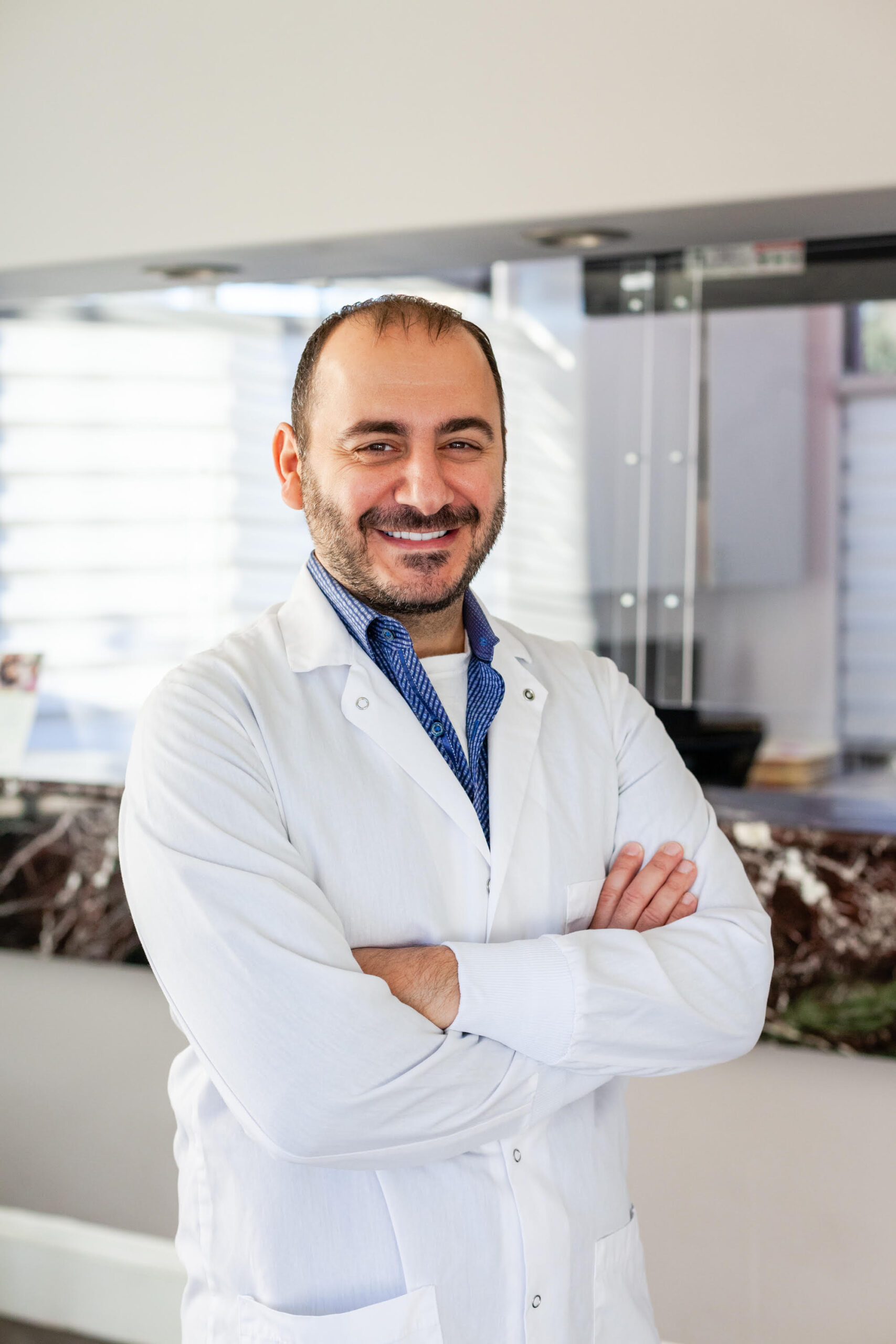
Meet Dr. Fadi Elzayat, DDS, FICOI
A-Dental Center has been a trusted part of the North Hollywood community since 1998. Dr. Fadi Elzayat has led the practice since 2008, bringing over 20 years of clinical experience in dental implants, All-on-4, full arch restorations, and comprehensive family dentistry.
A graduate of the USC Herman Ostrow School of Dentistry, one of the top dental schools in the country, Dr. Elzayat holds a Fellowship from the International Congress of Oral Implantologists (FICOI).
He focuses on cosmetic dentistry, with a strong emphasis on dental implants and advanced full-arch solutions. He performs every implant case personally and in-house, often utilizing Cone Beam 3D imaging for precision planning.
No referrals. No outside oral surgeons. Every phase of your treatment, from consultation to final restoration, is handled or supervised by Dr. Elzayat at A-Dental Center.
Beyond clinical skill, Dr. Elzayat is known throughout North Hollywood as “The Friendly Dentist” for his calm, straightforward approach, gentle technique, and zero-pressure consultations. A strong focus on comfort and clear communication ensures that each visit feels personalized and supportive.
Whether you haven’t seen a dentist in years or are facing a complex full arch case, patients from North Hollywood, Burbank, Studio City, and the greater San Fernando Valley are welcomed into a setting designed for a relaxed, judgment-free experience.
Credentials:
 USC School of Dentistry Graduate
 FICOI Fellow, International Congress of Oral Implantologists
 20+ Years Placing Dental Implants
 Bilingual, English & Spanish team
 ADA, CDA & San Fernando Valley Dental Society Member