Gentle Tooth Extraction in North Hollywood
Severe tooth pain, broken teeth, infected teeth, and wisdom teeth treated by Dr. Fadi Elzayat using gentle techniques, digital imaging, and sedation options when appropriate.
- ✓ Same Day Appointments
- ✓ Emergency Exams from $45 (Includes X-rays)
- ✓ Most PPO Insurance Accepted
- ✓ Serving North Hollywood Since 1998
★★★★★
4.9
Google Rating
★★★★★
700+
Five-Star Reviews on Google & Yelp
Since
1998
USC
School of Dentistry
FICOI
Fellow
Same Day
Appointments: Book Here
Comfortable, Anxiety-Free Tooth Extractions in North Hollywood
If you’re in pain or have been told you need a tooth removed, you’ve come to the right place.
A-Dental Center has been serving North Hollywood, Burbank, Studio City, and the San Fernando Valley since 1998. We perform both simple and surgical tooth extractions in-house, with no referrals, no runaround, with gentle technique and full sedation options for anxious patients.
Our dentist has over 20 years of experience and always explores every option to save a natural tooth before recommending extraction, but when extraction is necessary, we make sure the experience is as comfortable and pain-free as possible.
Same-day and next-day appointments are available.
Call (818) 593-0700 before noon, and we’ll almost always be able to accommodate you on the same day.
When Is a Tooth Extraction Necessary?
Dr. Elzayat recommends extraction only when a tooth cannot be saved by any other means. Common reasons include:
- Severe decay that has destroyed too much tooth structure to be restored with a filling or crown
- An infection or abscess that has not responded to root canal treatment
- Advanced gum disease causing significant bone loss and a loose, non-functional tooth
- A tooth fractured below the gum line that cannot be rebuilt
- Crowding that must be relieved before orthodontic treatment
- A retained baby tooth blocking the eruption of a permanent tooth
- An impacted wisdom tooth can cause pain, infection, or damage to neighboring teeth
If you’re unsure whether your tooth can be saved, call us for a same-day evaluation.
Dr. Elzayat will give you an honest assessment and walk you through all your options before recommending any treatment.
Before Extraction
Can Your Tooth Be Saved?
Most patients searching for an extraction actually want relief while keeping their tooth if possible. Dr. Elzayat always evaluates whether a tooth can be treated before recommending removal.
Depending on the damage, a tooth may be saved with a root canal, a dental crown, a deep filling, or gum therapy. Dr. Elzayat uses digital X-rays and Cone Beam 3D imaging to get a complete picture before making any recommendation.
Tooth extraction is only recommended when saving the tooth is no longer predictable or in the patient's best long term interest.
Alternatives Dr. Elzayat Will Consider First
Root canal therapy to remove infection and save the tooth
Custom dental crown to restore a cracked or weakened tooth
Deep filling or bonding for teeth with repairable decay
Gum therapy for teeth loosened by periodontal disease
Observation if the issue is minor and not progressing
Every patient receives an honest assessment. If the tooth can be saved, Dr. Elzayat will tell you. If it cannot, he will explain exactly why.
Call Today If You Have:
Severe toothache
Facial swelling
Dental abscess
Broken tooth
Cracked tooth
Loose tooth
Knocked out tooth
Bleeding after injury
Simple Extraction vs. Surgical Extraction
Not all extractions are the same. The type of extraction you need depends on your tooth's position, condition, and root anatomy. Dr. Elzayat performs both types in-house.
Simple Extraction
Best for: Fully visible teeth above the gum line
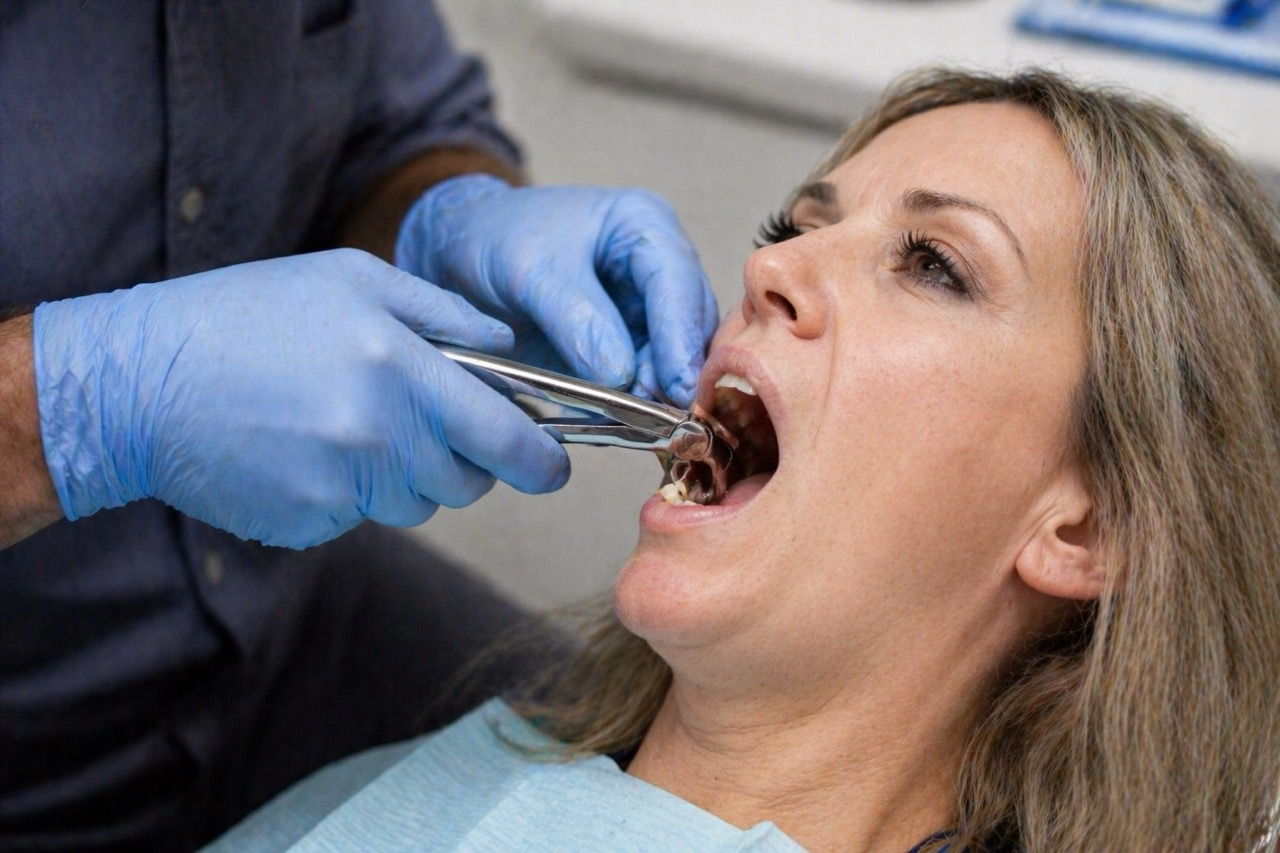
After numbing the area with local anesthesia, Dr. Elzayat loosens the tooth with a dental elevator and removes it with forceps. The procedure typically takes 20–40 minutes. Recovery is straightforward, with most patients back to normal within 2–3 days.
From $349 | PPO copay varies
Surgical Extraction
Best for: Broken, impacted, or below-gum-line teeth
A small incision is made in the gum to access the tooth. Bone may be gently removed if needed. The tooth is often sectioned for easier removal, then the site is cleaned and closed with dissolvable sutures. Sedation options are available. Recovery is typically 5–7 days.
From $499 | PPO copay varies
Dental anxiety is real, and it's one of the most common reasons people put off a tooth extraction they know they need. Our team understands this, and we've been helping anxious patients get comfortable, pain-free care since 1998.
Nitrous Oxide (Laughing Gas)
The most popular option. You inhale a gentle gas that creates a relaxed, floaty feeling within minutes. You remain conscious and can communicate, but feel calm and comfortable throughout. Wears off quickly, you can drive yourself home.
Oral Sedation
For patients with higher levels of anxiety. A prescription sedative is taken before your appointment. You’ll be in a deeply relaxed state and may have little to no memory of the procedure. A driver is required.
Just mention your anxiety when booking, and we’ll discuss the right option and make sure you’re fully comfortable before we start anything.
Common Questions About Sedation for Extractions
Will I be asleep?
With nitrous oxide, no. You stay fully conscious but deeply relaxed. With oral sedation, you will be in a twilight state. You may doze off but can still respond to instructions. You are never under general anesthesia for a standard extraction.
Will I remember the procedure?
With nitrous oxide, most patients remember everything but recall it as a comfortable, calm experience. With oral sedation, many patients remember very little or nothing at all.
Can I drive home afterward?
With nitrous oxide, yes. The effects wear off within minutes and you can drive yourself. With oral sedation, no. You will need someone to drive you home and stay with you for a few hours.
Is sedation safe?
Yes. Both nitrous oxide and oral sedation have excellent safety records. Dr. Elzayat reviews your medical history and current medications before recommending any sedation option. Vital signs are monitored throughout.
How long does recovery take?
Nitrous oxide wears off in about 5 minutes. Oral sedation effects can last 4 to 6 hours. We recommend resting for the remainder of the day if you choose oral sedation.
Which option is right for me?
Mention your anxiety level when you call (818) 593-0700. Dr. Elzayat will recommend the best option for your comfort level and procedure type.
What to Expect on the Day of Your Extraction
We know not knowing what to expect makes anxiety worse. Here’s exactly what happens at your appointment:
- Dr. Elzayat reviews your X-rays and confirms the treatment plan with you before anything begins.
- Local anesthesia is administered to fully numb the area. You’ll feel pressure and movement, not pain. If you feel any discomfort at any point, let Dr. Elzayat know immediately.
- The extraction is performed. Simple cases take 20–40 minutes. Surgical cases may take longer.
- A gauze pad is placed over the socket. You bite down gently to help a blood clot form.
- Before you leave, you receive written aftercare instructions and a direct number to call with any concerns.
Your Visit Step by Step
What Happens During a Tooth Extraction
Consultation
Review symptoms and medical history
Digital X-rays
Precise imaging of the tooth and bone
Anesthesia
Local numbing or sedation if needed
Tooth Removal
Gentle extraction by Dr. Elzayat
Post Op Care
Written instructions before you leave
Follow Up
Check healing, plan replacement if needed
Recovery & After care
Most patients recover from a simple extraction within 2–3 days.
Surgical extractions typically require 5–7 days before discomfort subsides, with full gum closure over 2–4 weeks.
Key Aftercare Instructions
- Bite gently on gauze for 30–45 minutes after the procedure to help the clot form
- Do NOT use straws, smoke, or spit forcefully for 48 hours, as these can dislodge the blood clot
- Take over-the-counter pain relief (ibuprofen or acetaminophen) as recommended
- Apply an ice pack to the outside of your face in 10-minute intervals for the first 24 hours
- Eat soft foods for the first few days: yogurt, mashed potatoes, soup, smoothies
- Continue brushing and flossing your other teeth normally; avoid the extraction site
Watch for Dry Socket
The most common post-extraction complication is dry socket, which occurs when the blood clot is dislodged before the wound has completely healed.
Symptoms include worsening pain 2–3 days after the procedure and a bad taste or smell from the socket.
If you experience these symptoms, call us immediately at (818) 593-0700.
Dry socket is easily treated in the office and should not be ignored.
Tooth Extraction Cost in North Hollywood
We believe in transparent pricing, no surprise bills, no hidden fees. Here's what you can expect:
Simple Extraction
From $349
PPO copay varies
Surgical Extraction
From $499
PPO copay varies
Wisdom Tooth
From $499
PPO copay varies
Most PPO dental insurance plans cover tooth extractions partially or in full. A-Dental Center verifies your insurance benefits before your appointment, so you know exactly what your out-of-pocket cost will be before we start.
Flexible financing is available through CareCredit and Cherry with monthly payment options. We never want cost to stand in the way of your oral health.
*Pricing may vary depending on complexity, sedation, and additional procedures (e.g., bone grafting). A full cost breakdown is provided at the consultation before any treatment begins.
Extraction Pricing at a Glance
| Procedure | Starting Price |
|---|---|
| Simple Extraction | From $349 |
| Surgical Extraction | From $499 |
| Wisdom Tooth Extraction | From $499 |
| Bone Graft (if needed for future implant) | Additional, quoted at consultation |
| Sedation (nitrous oxide or oral) | Depends on treatment |
Every patient receives a written treatment plan with full cost breakdown before any treatment begins. Most PPO insurance plans cover extractions partially or in full. Financing available through CareCredit and Cherry.
After Extraction
Do I Need a Bone Graft After Tooth Extraction?
When a tooth is removed, the jawbone in that area begins to shrink. This is called bone resorption and it happens naturally without the stimulation the tooth root used to provide. If you are planning to replace the tooth with a dental implant, preserving that bone at the time of extraction gives you the best foundation for a successful result later.
A bone graft is a straightforward procedure performed at the same time as your extraction. Dr. Elzayat places bone grafting material into the empty socket to maintain volume while your jaw heals. This typically adds only a few minutes to your appointment.
Bone graft is recommended when:
You plan to get a dental implant in the future
The extraction site is in a visible area (front teeth)
Significant bone loss already exists from infection
An All-on-4 or full arch case is being planned
Bone graft may not be needed when:
The tooth will be replaced with a bridge instead
The area has sufficient bone density already
No replacement is planned (back molars in some cases)
A partial denture is the chosen replacement
Dr. Elzayat will discuss whether a bone graft is appropriate for your situation during your consultation. Learn more about bone grafting at A-Dental Center.
Tooth Replacement Options After Extraction
Losing a tooth doesn't have to be permanent. Replacing a missing tooth is important because gaps can cause neighboring teeth to shift, bone loss in the jaw, bite problems, and changes in your facial appearance over time. A-Dental Center offers all tooth replacement options in-house, so you can plan your next step at the same appointment:
Dental Implant
The gold standard. A titanium post placed in the jawbone topped with a custom crown. Feels and functions like a natural tooth. Lasts a lifetime with proper care.
Dental Bridge
A fixed restoration that uses neighboring teeth as anchors to bridge the gap. Looks natural, no removal required, placed in two visits.
All-on-4
Missing most or all teeth? All-on-4 gives you a full arch of fixed, natural-looking teeth supported by just four implants, often placed the same day.
Dr. Elzayat will discuss your replacement options at the time of extraction so you can plan and make an informed decision at your own pace.
Comparing Your Replacement Options
| Option | Looks Natural | Preserves Bone | Fixed (permanent) | Removable |
|---|---|---|---|---|
| Dental Implant | ✓ | ✓ | ✓ | ✗ |
| Dental Bridge | ✓ | ✗ | ✓ | ✗ |
| Partial Denture | Moderate | ✗ | ✗ | ✓ |
| All-on-4 Full Arch | ✓ | ✓ | ✓ | ✗ |
Dental implants are the preferred long term solution because they are the only option that preserves jawbone and functions like a natural tooth. View implant pricing. Dr. Elzayat will discuss all options at your consultation.
Why Choose Us
Why North Hollywood Patients Choose A-Dental Center for Extractions
USC Trained, FICOI Credentialed Dentist
Dr. Elzayat is a USC School of Dentistry graduate and FICOI Fellow, one of the highest credentials in implant and oral surgery dentistry in the country.
Serving North Hollywood Since 1998
A-Dental Center has been part of the community since 1998. We know our patients by name, not by chart number.
Same Day Emergency Extractions
We hold same day slots every day for patients in pain. Call before noon and we will almost always get you in the same day. Learn about emergency care.
Bilingual Team, Se Habla Español
Our entire team is bilingual in English and Spanish. You will understand your diagnosis, options, and costs in the language you are most comfortable with.
All Extractions Done In House
No referrals to outside oral surgeons. Simple and surgical extractions, including wisdom teeth, all done by Dr. Elzayat at our North Hollywood office.
700+ Five Star Google and Yelp Reviews
Rated 4.9/5 across 700+ reviews. Patients consistently highlight our gentle approach, clear communication, and pain free technique. Read reviews.
Conservative Approach
We save teeth whenever possible. Extraction is only recommended when saving the tooth is no longer in your best long term interest. Root canal and crown options are always considered first.
Digital X-rays and CBCT Available
Cone Beam 3D imaging and digital X-rays for precise diagnosis. Less radiation, faster results, and a complete picture before any treatment begins.
Implant Replacement In House
If you need a replacement after extraction, Dr. Elzayat places dental implants personally. No referral to an outside surgeon required. Same doctor from extraction to final crown.
Transparent Pricing, No Surprises
Written treatment plan with full cost breakdown before any work begins. Most PPO insurance accepted. Financing through CareCredit and Cherry.
⭐⭐⭐⭐⭐ “The doctor was very insightful and took the time to explain the root cause of my dental issues in a way I could understand.”
— V.C.
Meet Your Dentist
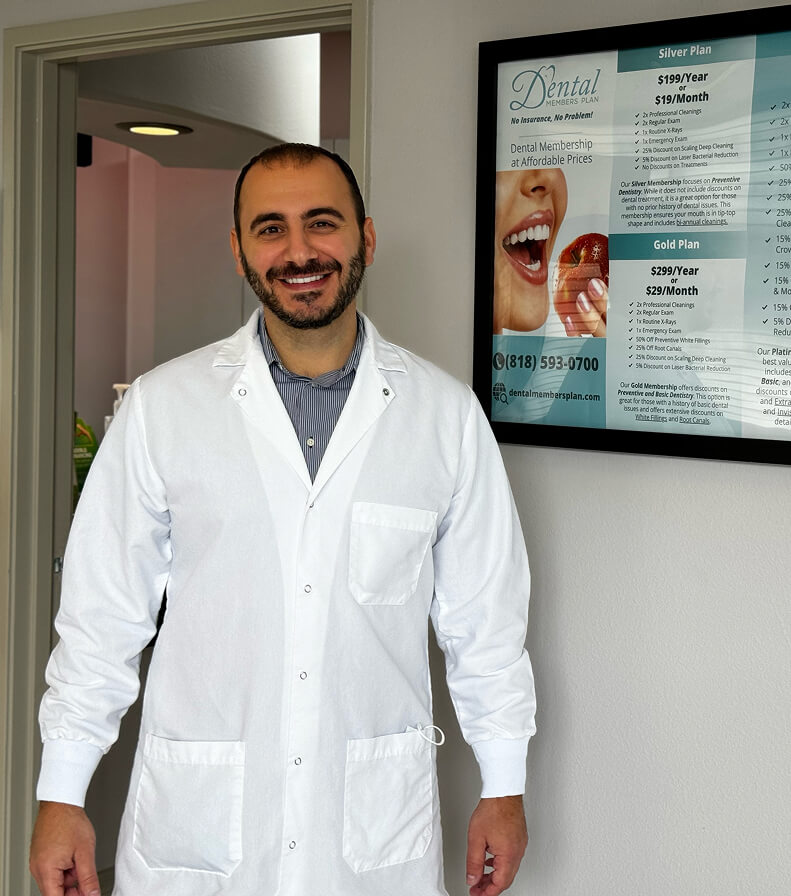
Meet Dr. Fadi Elzayat, DDS, FICOI
A-Dental Center has been a trusted part of the North Hollywood community since 1998. Dr. Fadi Elzayat has led the practice since 2008, bringing over 20 years of clinical experience in dental implants, All-on-4, full arch restorations, and comprehensive family dentistry.
A graduate of the USC Herman Ostrow School of Dentistry, one of the top dental schools in the country, Dr. Elzayat holds a Fellowship from the International Congress of Oral Implantologists (FICOI).
He focuses on cosmetic dentistry, with a strong emphasis on dental implants and advanced full-arch solutions. He performs every implant case personally and in-house, often utilizing Cone Beam 3D imaging for precision planning.
No referrals. No outside oral surgeons. Every phase of your treatment, from consultation to final restoration, is handled or supervised by Dr. Elzayat at A-Dental Center.
Beyond clinical skill, Dr. Elzayat is known throughout North Hollywood as “The Friendly Dentist” for his calm, straightforward approach, gentle technique, and zero-pressure consultations. A strong focus on comfort and clear communication ensures that each visit feels personalized and supportive.
Whether you haven’t seen a dentist in years or are facing a complex full arch case, patients from North Hollywood, Burbank, Studio City, and the greater San Fernando Valley are welcomed into a setting designed for a relaxed, judgment-free experience.
Credentials:
 USC School of Dentistry Graduate
 FICOI Fellow, International Congress of Oral Implantologists
 20+ Years Placing Dental Implants
 Bilingual, English & Spanish team
 ADA, CDA & San Fernando Valley Dental Society Member
Tooth Extraction and Wisdom Teeth Reviews
Patients share their pain-free extraction experience at A-Dental Center.
"I called them this morning to see if they could accommodate me same day for a tooth extraction. They were so graceful and penciled me in. The front staff is amazing and Dr. Edward is the best. I doubt there is a better dentist in all of LA metro."
Mario G.
Verified Yelp Review"I was able to get an extremely painful tooth extracted the same day. They were very cautious to make things as painless as possible. The dentist explained every step to me clearly and made sure I was totally numb before starting! He gave me juice and a pep talk when I started to freak out."
Jiji D.
Verified Yelp Review"I was in excruciating pain and a time crunch. They squeezed me in in literally 15 minutes, the staff was soooo friendly and helpful, the pricing was super affordable, and I was in and out with an extraction in under an hour."
Alesia M.
Verified Yelp Review"Same day tooth extraction, great staff, clean office. I would give this place 10 stars if I could. Thank you guys for treating my dental emergency."
Jordan I.
Verified Yelp Review"I had terrible pains, made an appointment last night and they got me in bright and early. I left with two extractions and a deep cleaning. Very caring and informative with their procedures. Couldn't be happier, thank you Dr. Elzayat and his team."
ek
Verified Google Review