Dental Implants in North Hollywood, CA
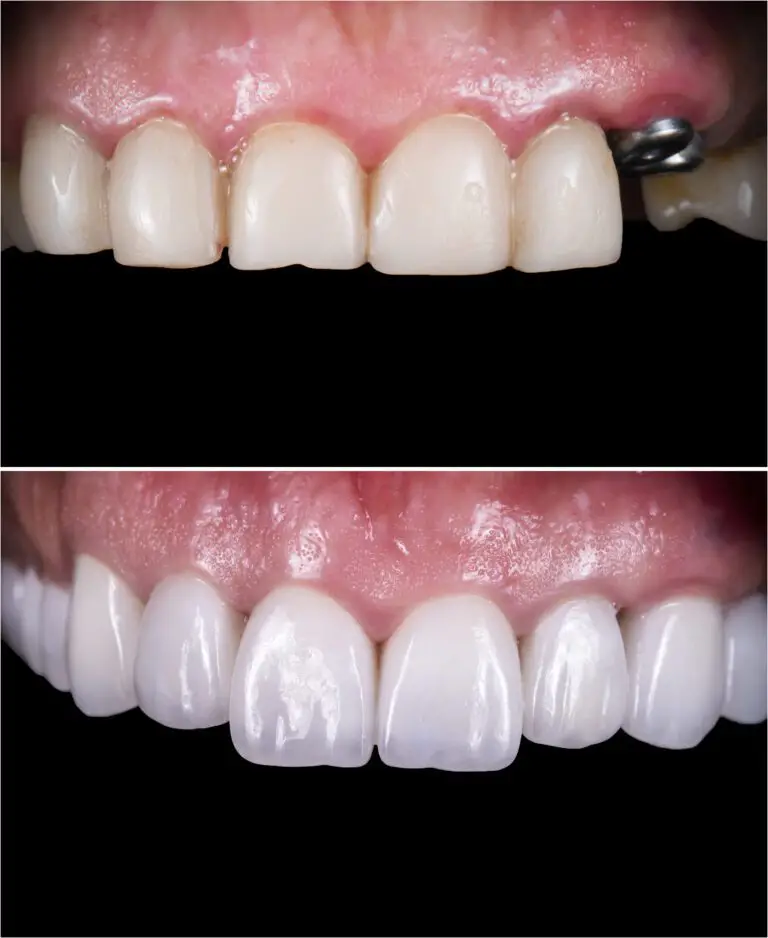
What Are Dental Implants?
Dental implant surgery is a process that replaces the roots of affected teeth with screw-like metal posts, restoring damaged/missing teeth with functional artificial teeth that look and function like real ones. This surgery helps when full dentures or bridgework are not an option—dental implant surgery is effective when there aren’t enough natural roots to support dentures or build tooth replacements.
The possibility of dental implant surgery depends on the condition of the jawbone and the type of implant that’s necessary. Surgery may require multiple procedures, and the primary benefit of dental implants is the solid support they provide for new teeth. This process requires the bone to heal tightly around the implant, requiring many months of healing and multiple procedures.
Benefits of Dental Implants
- Durability: With proper care, dental implants can last a lifetime, making them a cost-effective long-term solution for tooth replacement.
- Aesthetics: Dental implants are designed to look and feel like natural teeth, enhancing your smile and boosting your confidence.
- Functionality: Implants enable you to eat, speak, and smile with confidence, restoring the full functionality of your mouth.
- Bone preservation: Dental implants help maintain jawbone integrity by stimulating bone growth, preventing bone loss associated with missing teeth.
- Improved oral health: Unlike traditional bridges, dental implants do not require altering adjacent teeth, preserving the health of your natural teeth.
The Dental Implant Procedure
Placing dental implants involves several steps, each meticulously executed to ensure the best outcome. Here’s a look at the typical stages involved in placing dental implants at A-Dental Center:
Initial Consultation and Assessment
Treatment Planning
Dr. Elzayat develops a custom treatment plan based on your individual needs. This plan includes choosing the right implant type, mapping out placement locations, and outlining a timeline for the entire process.
Implant Placement Surgery
Osseointegration
Abutment Placement
Final Restoration
Have An Emergency?
Same-Day or Next Day Appointments Available
Implant-Supported Bridge
An implant-supported bridge is an effective solution for individuals who have lost multiple teeth in a row. This option utilizes dental implants to support a bridge, providing a stable and long-lasting restoration.
What Is An Implant-Supported Bridge?
A standard supportive dental bridge can prevent many problems related to tooth loss. An implant-supported bridge has several additional advantages, including restoring the majority of your chewing function so that you can eat again.
Traditional bridges rely on adjacent teeth for support, though nominally healthy teeth must be reshaped before the bridge can be securely placed with dental cement. By using implants to secure the bridge, healthy teeth don’t need to be ground down or reshaped, saving as many of your natural teeth as possible while still replacing the missing teeth. Implant-supported bridges replace multiple missing teeth using dental implants for stability and durability.
How Implant-Supported Bridges Are Placed
- Implant placement: The first step involves placing dental implants into the jawbone at strategic locations to support the bridge. Typically, two or more implants are placed depending on the number of missing teeth.
- Healing period: After implant placement, a healing period is required for the bone to fuse with the implant, a process called osseointegration. This can take several months.
- Bridge fabrication and fitting: Once the implants have been integrated, a custom bridge is designed to match the color and shape of your natural teeth. The bridge is then securely attached to the implants.
- Final placement: After ensuring the bridge fits comfortably, it is permanently secured to the implants, restoring your smile and functionality.
Advantages of Implant-Supported Bridges
- Stability: Unlike traditional bridges that rely on adjacent teeth for support, implant-supported bridges provide greater stability and do not shift or move while eating or speaking.
- Enhanced functionality: Patients can chew and bite with confidence, enjoying a wider variety of foods without concern for the stability of their restoration.
- Bone preservation: Implant-supported bridges stimulate the jawbone, preventing bone loss and maintaining facial structure.
- Preservation of Adjacent Teeth: This treatment option protects natural teeth, ensuring there is no reason to grind down, reshape, or place crowns on healthy neighbors, unlike the traditional bridge process.
- Natural Look and Feel: Implant-supported bridges are designed to blend seamlessly with natural teeth, replicating the look of your bright smile while providing a secure fit and comfortable bite that feels completely familiar.
- Improved Oral Health: Implants stimulate the jawbone, preventing bone loss and supporting overall oral health. They make it easier to maintain proper hygiene when compared to other dental options, offering a more natural feel and ease of care.
Who Is a Candidate for Implant-Supported Bridges?
Candidates for implant-supported bridges should have healthy gums, sufficient bone density to support the implants, and a commitment to good oral hygiene. Dr. Fadi Elzayat will perform a comprehensive evaluation to determine if this solution is right for you. Contact us to learn more.
Bone Grafting in North Hollywood, CA
Bone grafting is often necessary for patients who have experienced significant bone loss due to periodontal disease, tooth loss, or trauma. This procedure helps restore bone volume and density, providing a stable foundation for dental implants.
What Is Bone Grafting?
Bone grafting involves the surgical placement of bone material into areas where bone density is insufficient. This material can be sourced from various places:
- Autograft: Bone is taken from another part of the patient’s body, such as the hip or jaw.
- Allograft: Donor bone from a human cadaver is used.
- Xenograft: Bone from animal sources, typically bovine, is utilized.
- Synthetic grafts: Biocompatible materials are used to stimulate bone growth.
The Bone Grafting Procedure
- Consultation and imaging: Dr. Elzayat will assess your oral health and conduct imaging studies to determine the extent of bone loss.
- Anesthesia: Local anesthesia and possibly sedation is administered to ensure comfort during the procedure.
- Graft placement: The graft material is placed in the area where bone density is lacking. If necessary, membranes may be used to protect the graft site.
- Healing period: After the graft is placed, a healing period of several months is necessary for the bone to integrate with the graft material. Follow-up appointments will be scheduled to monitor healing.
- Implant placement: Once the graft has successfully integrated, dental implants can be placed in the newly formed bone.
Benefits of Bone Grafting
- Restores bone volume: Bone grafting rebuilds the jawbone, creating a strong foundation for dental implants.
- Enables implant placement: Patients who previously thought they were not candidates for implants due to bone loss can regain eligibility through bone grafting.
- Improves facial aesthetics: Restoring bone volume can help maintain facial structure and prevent a sunken appearance associated with tooth loss.
- Repair and rebuild weak jawbone: Bone grafting restores areas of bone loss, creating a solid, healthy base that supports dental implant options and overall facial structure. This dental technique helps replace weakened or diseased areas of the jawbone, and may be necessary if the patient is missing jawbone mass to support a bridge, crown, implant, or dentures.
Gum disease, developmental defects, missing teeth, dental trauma, and facial injuries can all be causes necessitating bone grafting. It’s crucial to replace the missing teeth as soon as possible to prevent jawbone deterioration.
- Saves your teeth: Bone grafting helps stabilize natural teeth, preventing further bone deterioration and protecting the strength and alignment of your natural smile. This process can solve existing dental problems, including infection, tumors, trauma, severe gum disease, and sinus issues. Bone grafts regenerate the surrounding bone, saving your teeth from conditions that can lead to tooth loss.
Who Would Need Bone Grafting?
Candidates for bone grafting typically have experienced bone loss due to one or more factors, including:
- Advanced periodontal disease
- Trauma or injury
- Long-term denture wear
- Congenital jawbone issues
Dr. Elzayat will conduct a thorough evaluation to determine if bone grafting is necessary for your implant procedure.
Sinus Lift
A sinus lift is a specialized bone grafting procedure designed to increase the amount of bone in the upper jaw, specifically around the molars and premolars. This is essential for patients with insufficient bone height due to the presence of the maxillary sinus.
What Is a Sinus Lift?
Sinus lift surgery, or sinus augmentation, is a dental procedure that uses bone grafts to increase the density of your upper jaw to prepare the structure for dental implants. It is performed on the upper jaw to increase the bone density between the maxillary sinuses and the jaw, so that dental implants can be placed successfully. Oral surgeons utilize sinus lift surgery to augment the jawbone, which is often deficient in bone quality and quantity.
Maxillary sinuses are hollow spaces behind the cheekbones and above the upper teeth. The roots of the patient’s upper back molars may extend into the sinuses, and when tooth loss occurs, little supportive jawbone is left. The sinus lift surgery process includes lifting the sinus membrane, where bone is added between the sinuses and the jaw.
When Is a Sinus Lift Necessary?
The Sinus Lift Procedure
- Consultation and imaging: Dr. Elzayat will evaluate your dental health and use imaging studies to determine the need for a sinus lift.
- Anesthesia: Local anesthesia and possibly sedation are provided to ensure a comfortable experience during the procedure.
- Accessing the sinus: An incision is made in the gum tissue to expose the bone, and a small window is created in the bone to access the sinus.
- Graft placement: Bone graft material is inserted into the sinus cavity to raise the floor of the sinus and promote bone growth.
- Healing period: After the procedure, a healing period of several months is required for the bone to integrate. Follow-up appointments will be scheduled to monitor progress.
- Implant placement: Once sufficient bone density is achieved, dental implants can be placed.
Benefits of Sinus Lift
- Enables upper jaw implant placement: A sinus lift makes it possible for patients to receive dental implants in the upper jaw, expanding their options for tooth replacement.
- Restores bone volume: By increasing bone density, a sinus lift improves the overall health of the jawbone.
- Enhances aesthetic outcomes: Restoring bone volume can improve facial aesthetics and support the natural contours of the face.
- Restored Dental function: By adding bone height to the upper jaw, a sinus left can restore chewing, speaking, and smiling functions, while introducing comfort and stability after the implants are placed.
Who Should Consider a Sinus Lift?
Candidates for a sinus lift typically have insufficient bone height in the upper jaw due to the presence of the maxillary sinus. Dr. Elzayat will assess your situation to determine if a sinus lift is necessary for successful implant placement.
Dental Implant Options in North Hollywood, CA
At A-Dental Center, we offer various dental implant options to cater to the diverse needs of our patients. Understanding these options can help you make an informed decision about your dental restoration.
Traditional Dental Implants
Single-tooth implants offer a durable, natural-looking solution that replaces a single missing tooth without affecting the surrounding teeth. Dental implants can help restore your natural appearance, improve chewing ability, and improve your speech and smile.
Implant-Supported Bridges
Implant-supported bridges replace multiple missing teeth simultaneously, providing stability, improving appearance, preserving the jawbone, and protecting neighboring teeth. This process has both functional and aesthetic benefits and is often preferred to traditional bridges or removable dentures. It can restore up to 95% of lost chewing function.
All-On-4 Implants
All-On-4 implants are a popular alternative to full-arch dental restoration.
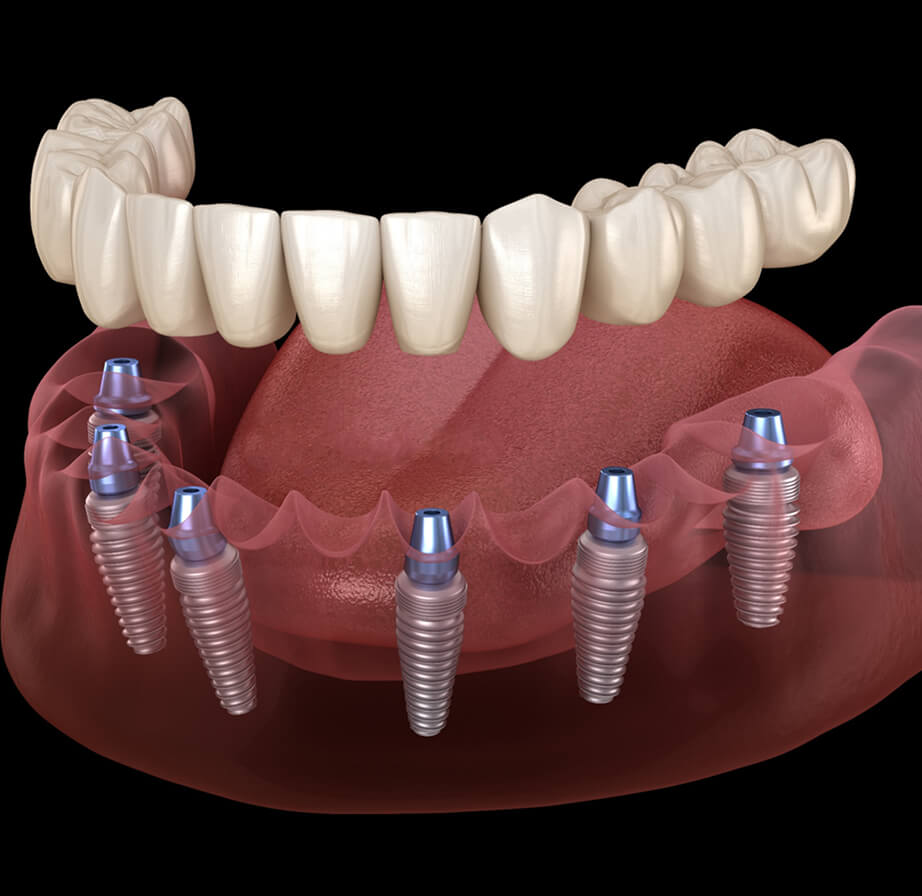
Using four carefully-placed implants, this technique supports a complete set of fixed or removable dentures. This cost-effective solution utilizes four implants to support an entire arch of teeth, with same-day results, improved chewing function, and a natural smile.
All-On-6 Implants
All-On-6 dental implants involve several phases of restoration, depending on the patient’s oral health. This installation process may involve bone grafts or sinus lifts, followed by dental implants and connectors. Artificial teeth are installed, and the entire process can take a few months to complete.
All-On-6 refers to the teeth in the dental arch, sitting on six dental implants strategically placed for stability. These titanium implants serve as anchors set into the jawbone and provide a stable and permanent solution for missing teeth. This full-arch method allows patients to receive a temporary set of teeth on the same day as the surgery, with the final permanent teeth replaced after a few months. All-On-6 procedures restore chewing function, prevent bone deterioration, and restore your smile.
Mini Dental Implants
Mini dental implants are a less invasive, more affordable option that’s ideal for patients with limited bone density seeking a quicker recovery. Mini dental implants are smaller in diameter than traditional implants and are an excellent option for patients with limited bone density or those who require a less invasive option. They can be used to secure dentures or as single-tooth replacements.
Zygomatic Implants
This advanced solution is for patients with severe bone loss, where implants are anchored in the cheekbone to provide a stable foundation for new teeth. Zygomatic implants are anchors into the zygomatic bone (cheekbone) for patients with severe bone loss in the upper jaw. This option provides stability and support when traditional implants are not feasible.
Immediate Load Implants
Immediate load implants allow patients to leave the office with a functional set of teeth the same day as their surgery, which reduces downtime and boosts confidence. This option is particularly beneficial for patients seeking a quick solution to restore their smile.
Full Arch Options for Dental Implants
Several full arch approaches (All-On-4, All-On-6, and implant-supported dentures) restore a complete smile, emphasizing long-term stability, restoring aesthetics, and reinforcing the patient’s natural smile.
How To Prepare For Dental Implants
Patients can follow practical steps to prepare for their procedure, including dental evaluations, lifestyle adjustments, and pre-surgery care instructions. Proper preparation supports healing, comfort, and long-term implant success.
The dental planning process for implants may include:
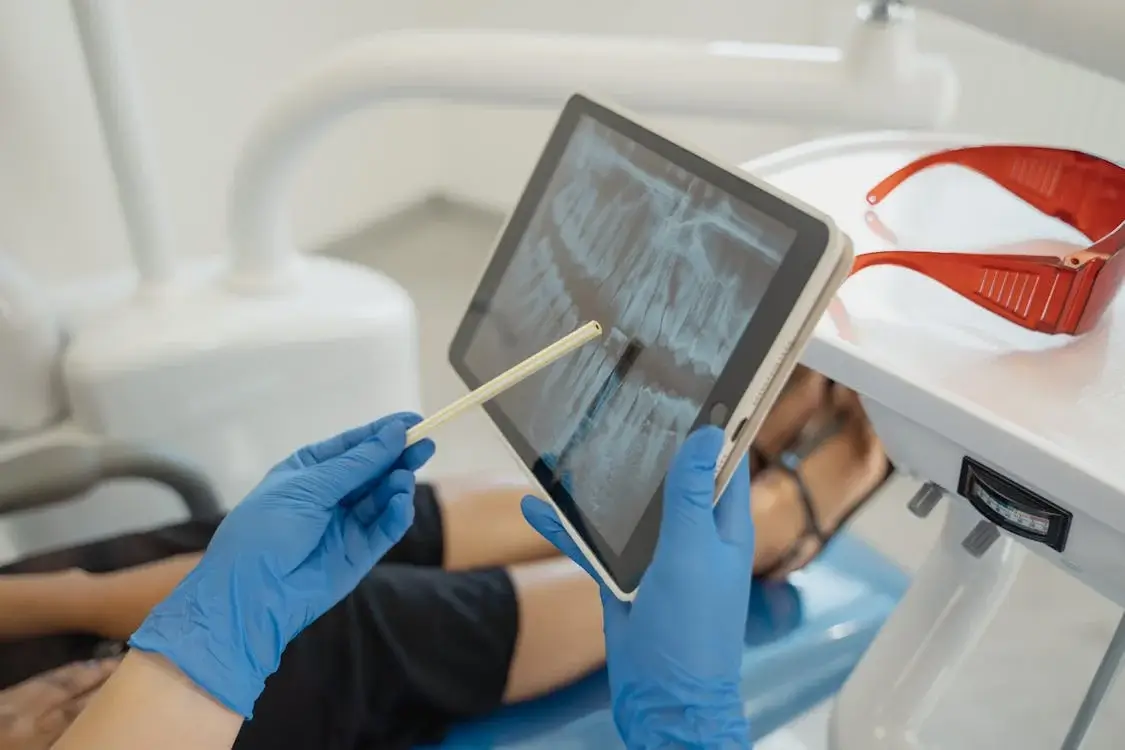
- A full dental exam with X-rays and 3D images.
- Reviews of your medical history, including a conversation with your medical professional about conditions and medications.
- Treatment plan overviews are designed around how many teeth need to be replaced and the condition of your jawbone.
Your dental implant surgery may include local anesthesia, sedation, and/or general anesthesia to ensure you are calm or in a complete sleep-like state to ensure your safety. Speak with your dental specialist before your surgery to find out what options are best for you. They can offer preparatory advice and may advise you to limit your intake of food or drink before the surgery. For most dental implant surgeries, it’s a good idea to have someone drive you home afterward.
Choosing the Right Dental Implants Option
Selecting the appropriate dental implant option requires a thorough consultation with Dr. Fadi Elzayat. During this appointment, he will assess your oral health, discuss your goals, and recommend the best solution tailored to your needs.
Your Lasting Smile Awaits: Embrace the Future with A-Dental Center Dental Implants
Dental implants are a revolutionary solution for restoring missing teeth, providing durability, functionality, and aesthetics. At A-Dental Center in North Hollywood, CA, we take pride in delivering personalized care to help you achieve a healthy and beautiful smile.
Whether you’re considering an implant-supported bridge, bone grafting, sinus lift, or exploring various dental implant options, Dr. Fadi Elzayat and our dedicated team are here to guide you every step of the way. Contact us today to schedule a consultation and take the first step towards restoring your smile!
Looking to enhance your smile or address dental concerns? Schedule your appointment today with Dr. Fadi Elzayat at A-Dental Center, conveniently located at 11335 Magnolia Blvd Suite #1a, North Hollywood, CA. Call us at (818) 593-0700 to take the first step toward a healthier, more confident smile!
Frequently Asked Questions
Who is eligible for dental implants?
Good oral health, sufficient bone density, a non-smoking history, and other key features are considered during consultations. Conditions like uncontrolled diabetes or advanced osteoporosis can hinder bone healing and may prevent you from having a dental implant opportunity. Patients need to be adults, with jawbones that have finished growing, and must commit to a multi-month treatment process.
What can I expect during my procedure?
The typical procedure includes implant placement, healing, and crown placement, with advanced tools and modern techniques that make the experience smooth and predictable. The dental implant process may require local anesthesia or sedation, as well as a small incision in the gum to expose the jawbone for the placement of a titanium implant or artificial tooth root. This implant fuses with the bone during osseointegration, and after several months of healing, a second surgery may be required to attach a healing abutment and permanent crown.
How painful is getting a dental implant?
Most patients experience minimal discomfort thanks to local anesthesia and sedation, with a mild soreness post-surgery. Any pain or soreness is manageable with over-the-counter pain relief.
What is the downside of getting dental implants?
There are potential risks, including advanced healing time, total cost, and rarer complications that may require additional surgeries or dental repair. Overall, dental implant surgery has a high success rate with long-term benefits.
How much do dental implants cost?
Cost of dental implants may vary depending on the number of implants (All-On-4 versus All-On-6), the type of restoration, and preparatory procedures (anesthesia, sedation). Patients should schedule a consultation with their dentist for an accurate estimate and breakdown of costs. Consider the quality and location when searching for affordable dental implants near me.
We are based in North Hollywood, and proudly serve the following areas:
- North Hollywood
- NoHo Arts District
- Valley Village
- Toluca Lake
- Toluca Terrace
- Los Angeles
- Burbank
- Studio City
- Valley Glen
- Sherman Oaks
- Van Nuys
- Glendale
- North Hills
- Northridge
- Panorama City
- Pacoima

What Our Patients Are Saying
Learn More About Dental Implants