
How Much Do Veneers Cost in 2026? A Complete Pricing Guide by Type
Veneer prices depend on the material and the number of teeth treated. At A-Dental Center in North Hollywood, CA, porcelain veneers start at $1,700 per tooth, or $1,500 per veneer when you treat 8 or more teeth, so a set of eight starts at $12,000. This guide breaks down veneer pricing by type, explains what drives the cost, and covers insurance, financing, and payment options so you can plan your smile makeover with a clear budget in mind.What Are Dental Veneers?
Dental veneers are thin, custom made shells that cover the front surface of teeth to improve their shape, color, size, or alignment. The American Dental Association (ADA) describes veneers as natural looking coverings made from high quality dental material (ADA MouthHealthy). Unlike dental crowns, which wrap around the entire tooth, veneers bond only to the visible front surface. Veneers are a popular choice for patients who want to correct chipped teeth, close small gaps, fix uneven spacing, or cover deep stains that whitening cannot remove. Dr. Fadi Elzayat, DDS, FICOI, at A-Dental Center uses both porcelain and composite materials and recommends the best option based on each patient’s goals, budget, and oral health.How Much Do Porcelain Veneers Cost?
At A-Dental Center in North Hollywood, porcelain veneers start at $1,700 per tooth. For cases of 8 or more veneers, the price drops to $1,500 per veneer, so a set of eight starts at $12,000. The final price depends on the complexity of the case, the number of teeth involved, and whether additional procedures such as gum contouring or tooth preparation are needed. Porcelain veneers are fabricated in a dental laboratory from ceramic material that closely matches the translucency and light reflection of natural tooth enamel. The process typically requires two office visits. During the first visit, the dentist removes a thin layer of enamel (0.3 to 0.5 millimeters), takes impressions or digital scans, and places temporary veneers. During the second visit, the permanent veneers are bonded to the teeth. A systematic review published in the International Journal of Prosthodontics analyzed 6,500 porcelain laminate veneers and found a 10 year cumulative survival rate of 95.5% (Goethem et al., National Library of Medicine). This means porcelain veneers, when placed by an experienced dentist and maintained with good oral care, can last 10 to 20 years before needing replacement. Patients considering porcelain veneers at A-Dental Center receive a consultation with Dr. Elzayat, who uses digital imaging to preview results before any preparation begins.Real Porcelain Veneer Results
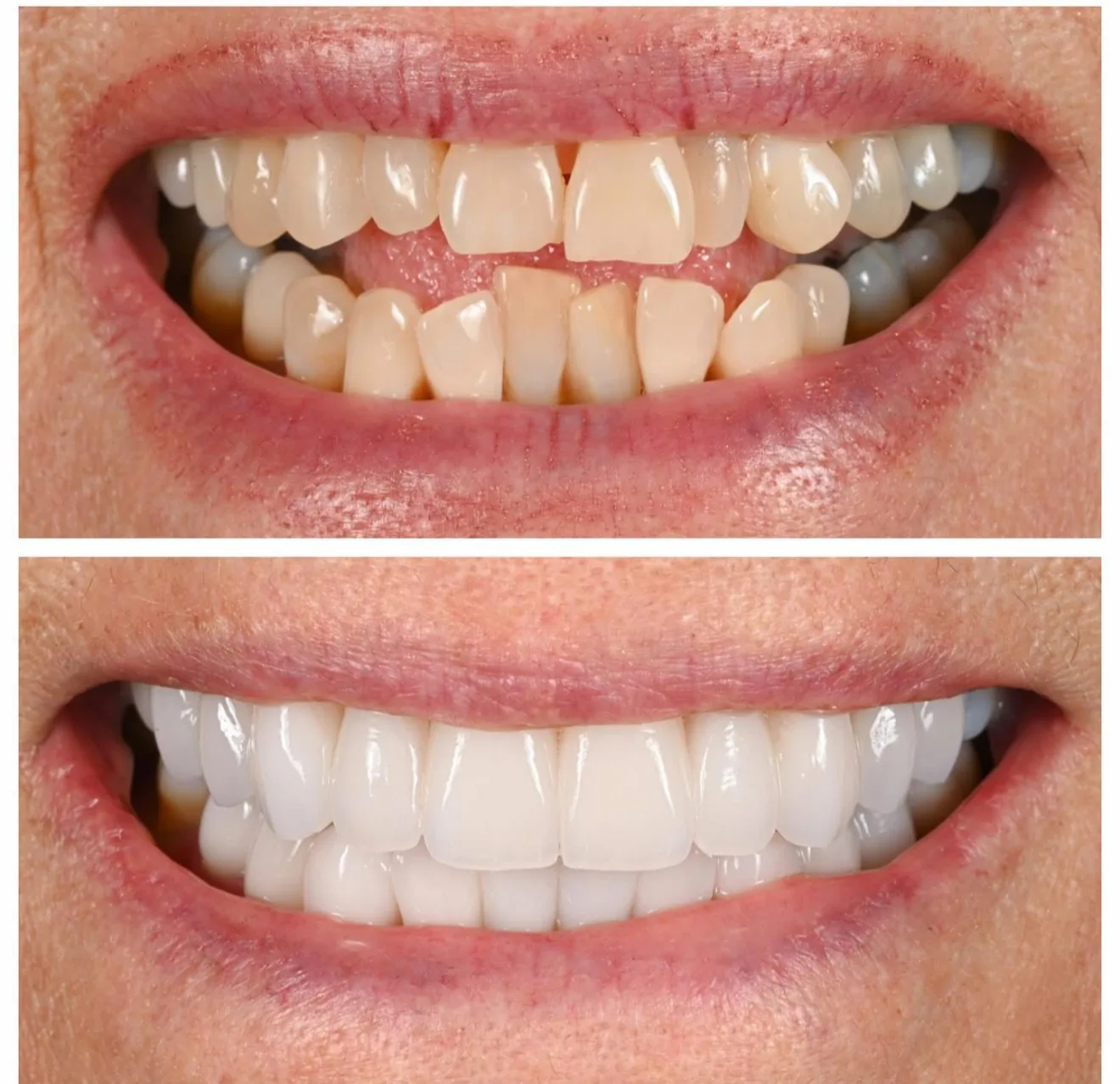
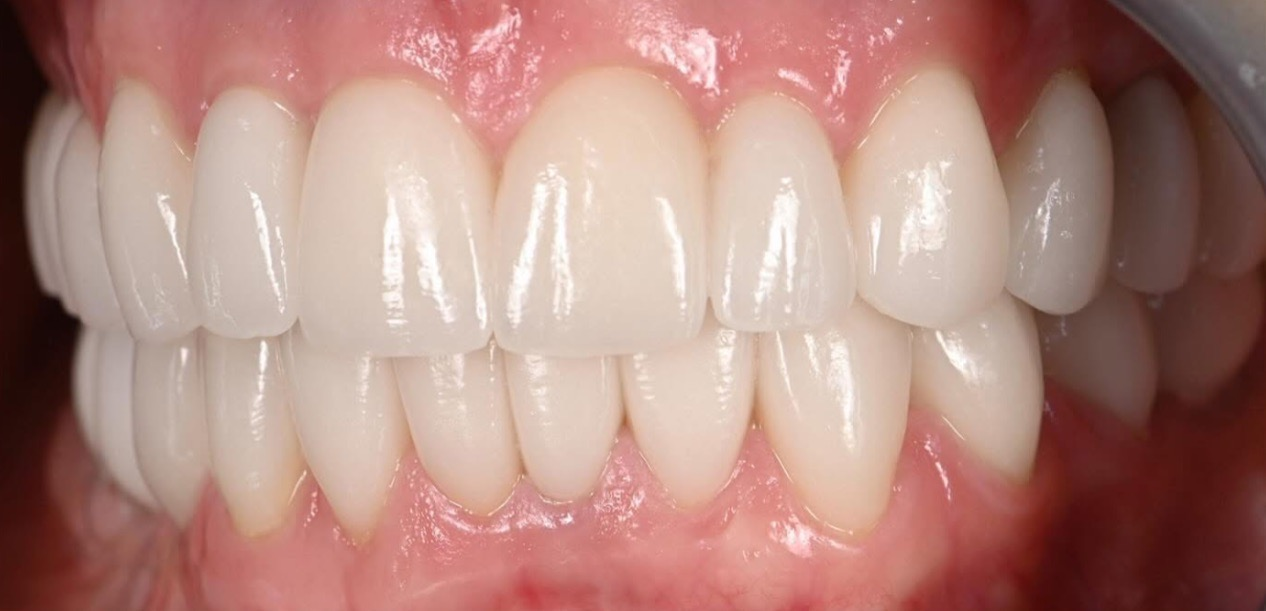
Every smile is unique. The cases below feature actual A-Dental Center patients treated by Dr. Fadi Elzayat. These before-and-after photos demonstrate how porcelain veneers can improve tooth color, shape, spacing, chips, worn enamel, and overall smile symmetry while maintaining a natural appearance. Results vary based on each patient’s oral health and treatment goals.Case 1

Case 2

Case 3

Case 4

Case 5

Case 6

Ready to See What’s Possible?
Every veneer case is custom designed around your smile, facial proportions, bite, and cosmetic goals. During your consultation, Dr. Fadi Elzayat will evaluate your teeth, discuss your options, and create a personalized treatment plan designed to achieve a natural-looking, long-lasting result. Schedule My Veneer Consultation Call (818) 593-0700How Much Do Composite Veneers Cost?
Composite veneers cost between $250 and $1,500 per tooth, making them the most affordable veneer option. The lower price reflects the difference in material and the fact that composite veneers are applied directly to the tooth surface in a single visit, without the need for laboratory fabrication. During the procedure, the dentist applies tooth colored composite resin in layers, sculpts it to the desired shape, and hardens each layer with a curing light. The entire process for a single tooth takes about 30 to 60 minutes. Composite veneers are a good fit for patients with minor cosmetic concerns such as small chips, slight discoloration, or minor shape irregularities. They require less enamel removal than porcelain veneers, and in some cases, no enamel removal at all. The tradeoff is durability. Composite resin is softer than porcelain and more likely to stain over time. Most composite veneers last 4 to 8 years before they need replacement or repair. For patients comparing porcelain veneers vs composite veneers, the decision often comes down to budget now versus long term value.How Much Does a Full Set of Veneers Cost?
A full set of veneers typically means 6 to 10 teeth across the upper arch (the teeth visible when you smile). The total cost depends on the material and the number of teeth included.| Veneer Type | Per Tooth | 6 Veneers | 8 Veneers |
| Porcelain (A-Dental Center) | From $1,700 | From $10,200 | From $12,000 |
| Composite | $250 to $1,500 | $1,500 to $9,000 | $2,000 to $12,000 |
| No prep / Lumineers | $800 to $2,000 | $4,800 to $12,000 | $6,400 to $16,000 |
What Factors Affect the Cost of Veneers?
The price you pay for veneers depends on several factors that vary from patient to patient and from one dental office to another. Material type. Porcelain veneers cost more than composite because the ceramic shells are custom fabricated in a dental laboratory, require specialized equipment, and involve two office visits. Composite veneers are sculpted directly by the dentist in one visit, which reduces both lab fees and chair time. Number of teeth. Most patients treat 4 to 10 teeth. Treating more teeth increases the total cost but often decreases the per tooth price. A single veneer on a front tooth might cost more per unit than a set of eight because the dentist must match the veneer to surrounding natural teeth, which requires extra precision. Geographic location. Dental fees vary by region. Practices in major metropolitan areas like Los Angeles typically charge more than practices in smaller cities. However, practices in the San Fernando Valley, including North Hollywood, often offer lower fees than offices in Beverly Hills or Westside Los Angeles for the same quality of work. Dentist’s experience. A dentist with advanced training in cosmetic dentistry and years of veneer cases may charge higher fees. This investment often translates to better aesthetic results, more precise fit, and fewer complications over time. Preparatory procedures. Some patients need additional work before veneers can be placed. Gum contouring, tooth reshaping, treatment for decay, or bite adjustments all add to the total cost. These procedures are priced separately and discussed during the treatment planning stage.How Do Veneers Compare to Crowns in Cost?
 Dental crowns (sometimes called caps) and veneers serve different purposes, and their costs reflect that difference. A dental crown covers the entire tooth and is used when a tooth is significantly damaged, decayed, or weakened. A veneer covers only the front surface and is used for cosmetic improvement on teeth that are structurally sound.
Porcelain crowns typically cost $800 to $3,000 per tooth. Porcelain veneers at A-Dental Center start at $1,700 per tooth. Both involve laboratory fabrication and high quality ceramic materials, which is why their prices overlap.
The right choice depends on the condition of the tooth. If the tooth has a large filling, a crack, or has had a root canal, a crown provides the structural support the tooth needs. If the tooth is healthy but has cosmetic flaws, a veneer preserves more natural tooth structure while delivering the desired appearance.
For patients weighing both options, the team at A-Dental Center recommends scheduling an exam so Dr. Elzayat can evaluate tooth structure and recommend the most appropriate treatment.
Dental crowns (sometimes called caps) and veneers serve different purposes, and their costs reflect that difference. A dental crown covers the entire tooth and is used when a tooth is significantly damaged, decayed, or weakened. A veneer covers only the front surface and is used for cosmetic improvement on teeth that are structurally sound.
Porcelain crowns typically cost $800 to $3,000 per tooth. Porcelain veneers at A-Dental Center start at $1,700 per tooth. Both involve laboratory fabrication and high quality ceramic materials, which is why their prices overlap.
The right choice depends on the condition of the tooth. If the tooth has a large filling, a crack, or has had a root canal, a crown provides the structural support the tooth needs. If the tooth is healthy but has cosmetic flaws, a veneer preserves more natural tooth structure while delivering the desired appearance.
For patients weighing both options, the team at A-Dental Center recommends scheduling an exam so Dr. Elzayat can evaluate tooth structure and recommend the most appropriate treatment.
Replacing Old Veneers or Crowns
 Porcelain veneers and crowns do not last forever. Over time, the margins can wear, the color can shift, or the underlying tooth may change. When old restorations begin to show their age, replacing them with modern materials and techniques can dramatically improve both appearance and function.
Dr. Elzayat evaluates existing restorations during your consultation and provides honest recommendations on whether they can be maintained or should be replaced.
Porcelain veneers and crowns do not last forever. Over time, the margins can wear, the color can shift, or the underlying tooth may change. When old restorations begin to show their age, replacing them with modern materials and techniques can dramatically improve both appearance and function.
Dr. Elzayat evaluates existing restorations during your consultation and provides honest recommendations on whether they can be maintained or should be replaced.
How Do Dental Implants Compare to Veneers in Cost?
Dental implants and veneers solve different problems. A veneer improves the appearance of a tooth that is still present and healthy. A dental implant replaces a tooth that is missing entirely. A single dental implant at A-Dental Center starts at $2,799, including the implant post, abutment and zirconia crown. Full details on implant pricing are available on the cost of dental implants page. Some patients need a combination of both treatments. For example, a patient may receive implants to replace missing teeth in the back of the mouth and veneers to improve the appearance of front teeth. Dr. Elzayat creates treatment plans that coordinate both procedures for the best functional and aesthetic outcome.Does Insurance Cover Veneers?
Dental insurance does not cover veneers in most cases. Insurance companies classify veneers as a cosmetic procedure, which places them outside standard benefit plans. This applies to PPO, HMO, and most employer sponsored dental plans. There are limited exceptions. If a veneer is needed to restore a tooth damaged by trauma, decay, or a congenital condition like amelogenesis imperfecta, some insurance plans may cover a portion of the cost. The dentist must submit documentation showing that the veneer serves a restorative purpose, not just a cosmetic one. Even when veneers are not covered, the consultation, X rays, and any preparatory procedures (such as decay removal or gum treatment) may be covered under your plan’s preventive or basic restorative benefits. A-Dental Center accepts most major dental insurance plans and helps patients understand their benefits before treatment begins. Visit the insurance and financing page or call the office to verify your coverage.How Can You Pay for Veneers Without Insurance?
Most patients pay for veneers out of pocket, and several financing options make the cost manageable. CareCredit. CareCredit is a healthcare credit card accepted at A-Dental Center. It offers promotional periods with 0% interest when the balance is paid within the promotional window (typically 6, 12, or 24 months). Patients can apply online or at the office. Read more about using CareCredit at A-Dental Center. Cherry. Cherry is a patient financing platform that offers flexible monthly payment plans with quick approval. No hard credit check is required to see your options. In house payment plans. A-Dental Center offers payment plans that allow patients to split the cost of treatment into monthly installments. No third party lender is involved, and terms can be arranged directly with the office. HSA and FSA funds. If your veneers serve a documented restorative purpose (for example, repairing a tooth fractured in an accident), you may be able to use Health Savings Account or Flexible Spending Account funds. Check with your plan administrator before assuming eligibility. Dental membership plan. For patients without insurance, A-Dental Center offers an in house membership plan that provides discounts on treatments including cosmetic procedures. This plan covers routine preventive care and reduces the cost of additional treatments throughout the year.Are Veneers Permanent? How Long Do They Last?
Veneers are not permanent in the sense that they last forever, but the process is irreversible because enamel is removed to accommodate the veneer. Once enamel is removed, the tooth will always need some form of restoration. Porcelain veneers last 10 to 20 years with proper care. A study published in the National Library of Medicine reported a 15 year cumulative survival rate of 96% for ceramic laminate veneers (PMC study on veneer survival). Composite veneers last 4 to 8 years on average and may need to be replaced or repaired more frequently. To get the longest life from your veneers, brush twice daily with a non abrasive toothpaste, floss daily, avoid biting hard objects (ice, pen caps, fingernails), and wear a night guard if you grind your teeth. Regular dental checkups every six months allow the dentist to monitor the condition of your veneers and address any issues early. For a full breakdown of veneer longevity and maintenance, read are veneers permanent.What Does the Veneer Process Look Like at A-Dental Center?
The veneer process at A-Dental Center follows a structured sequence designed to deliver precise results. Step 1: Consultation and digital smile design. Dr. Elzayat evaluates your teeth, discusses your goals, and uses digital imaging to show you a preview of your expected results. This visit also includes X rays and a full oral exam. Step 2: Tooth preparation. A thin layer of enamel (typically 0.3 to 0.5 millimeters) is removed from the front of each tooth. Impressions or digital scans are taken and sent to the dental laboratory. Temporary veneers are placed to protect the prepared teeth. Step 3: Bonding. Once the permanent veneers are ready (usually within 1 to 2 weeks), the temporaries are removed. The dentist checks the fit, shape, and color, makes any final adjustments, and bonds the veneers permanently using dental cement and a curing light. Step 4: Follow up. A follow up visit is scheduled to check the bite, ensure comfort, and make any minor adjustments. Patients interested in seeing real results can view veneer before and after cases completed at A-Dental Center.Frequently Asked Questions About Veneer Costs
How much do veneers cost without insurance? Without insurance, porcelain veneers at A-Dental Center in North Hollywood start at $1,700 per tooth, or $1,500 per veneer for cases of 8 or more. Composite veneers cost $250 to $1,500 per tooth. Financing options such as CareCredit, Cherry, and in house payment plans are available to help manage the cost. How much do veneers cost with insurance? Most dental insurance plans do not cover veneers because they are classified as cosmetic. In rare cases where a veneer is medically necessary (for example, to restore a tooth broken by trauma), insurance may cover a portion of the cost. Contact your insurance provider and A-Dental Center to verify your benefits. How much does a full set of veneers cost? A full set of eight porcelain veneers starts at $12,000 at A-Dental Center, since cases of 8 or more are $1,500 per veneer. The final price depends on the complexity of your case. Are composite veneers worth the lower cost? Composite veneers are a good option for patients with minor cosmetic concerns who want an affordable, same day solution. They cost less upfront but need replacement more frequently (every 4 to 8 years compared to 10 to 20 years for porcelain). Over 20 years, porcelain veneers often cost less in total because they require fewer replacements. Can I get veneers on just one tooth? Yes. Single tooth veneers are common for patients with one chipped, discolored, or misshapen tooth. The dentist matches the veneer’s shade and shape to your surrounding natural teeth for a consistent appearance. Do Lumineers cost more than traditional veneers? Lumineers, a brand of no prep porcelain veneers, cost $800 to $2,000 per tooth. This is comparable to traditional porcelain veneers. The main difference is that Lumineers require little or no enamel removal, which makes them a more conservative option. Not every patient is a candidate for Lumineers, so a consultation is needed to determine eligibility.Schedule Your Veneer Consultation at A-Dental Center
Veneer pricing varies based on material, the number of teeth, and the specific needs of each case. The best way to get an accurate cost estimate is to schedule a consultation with a qualified cosmetic dentist who can evaluate your teeth and discuss your options in person. A-Dental Center has served the North Hollywood and greater Los Angeles community since 1998. Dr. Fadi Elzayat, DDS, FICOI, and his team offer porcelain veneers, composite veneers, and full smile makeover services with transparent pricing and flexible payment options. Call (818) 593-0700 to book your veneer consultation, or visit A-Dental Center at 11335 Magnolia Blvd Suite 1a, North Hollywood, CA 91601.Related: Porcelain Veneers · Toothache Causes and What to Do
Related: Teeth Whitening Trays