
Wisdom Teeth Removal in North Hollywood, CA | From $499
- ★ 700+ Five-Star Google & Yelp Reviews
- ✓ USC-Trained & ICOI-Credentialed Dentist
- ✓ Bilingual Team, Se Habla Español
- ✓ Most PPO Insurance Accepted
- ✓ Same-Day & Emergency Appointments
★★★★★
4.9
Google Rating
★★★★★
700+
Five-Star Reviews on Google & Yelp
20+
Years in NoHo
USC
School of Dentistry
FICOI Fellow
International Congress of Oral Implantologists
Same Day
Appointments: Book Here
Wisdom Teeth Removal Cost in North Hollywood
⚡ Dental Emergency?
$45 Flat Rate
Emergency Exam
Get Seen Today.
- ✓ $45 Emergency Exam - Same Day
- ✓ Surgical extraction (impacted): from $499 per tooth
- ✓ Wisdom Teeth Removal: from $499
- ✓ Lost or Loose Crown
- ✓ Bleeding or Swollen Gums
Flat exam fee. X-rays included if needed. Many treatments same day
"Called at 8am, in the chair by 10am and left pain-free."
Miguel A., North Hollywood
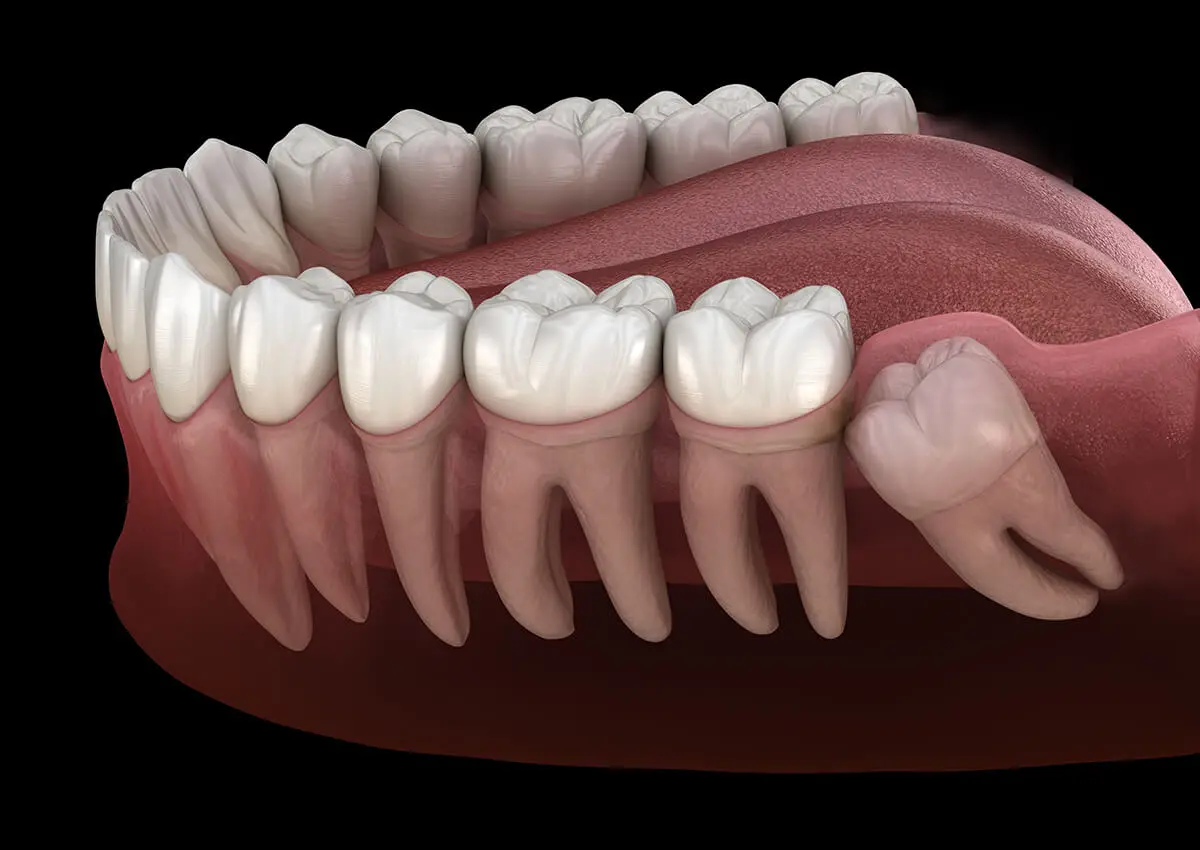
What Are Wisdom Teeth?
Wisdom teeth are the third molars located at the very back of the mouth. Most people develop four wisdom teeth between the ages of 17 and 25. Unfortunately, the modern human jaw often does not have enough room for these teeth to erupt properly.
When wisdom teeth cannot fully emerge, they become impacted, partially or completely trapped beneath the gums or bone, pressed against neighboring teeth, or angled in a direction that prevents normal eruption. Avoid worsening infection by seeking evaluation early. Left untreated, impacted wisdom teeth can cause:
- Jaw pain, pressure, and stiffness
- Gum swelling and bleeding
- Recurring infections (pericoronitis) requiring emergency dental care
- Damage to neighboring second molars, sometimes requiring dental implants to replace lost teeth
- Tooth decay in hard-to-clean areas
- Bone loss around the impacted tooth
- Crowding and shifting of surrounding teeth
- Cyst formation around the tooth root
- Progressive gum disease and persistent bad breath
Early evaluation and timely removal typically result in a simpler procedure. Most patients recover quickly: often within days. Same-day appointments are available. Call (818) 593-0700 now.
Signs You May Need Wisdom Teeth Removal
Many patients wait until severe pain develops before seeking care. However, impacted wisdom teeth can silently damage neighboring teeth and bone long before obvious symptoms appear. Don’t wait until swelling spreads: schedule an evaluation if you experience any of the following:
- Jaw pain or pressure near the back of the mouth
- Swollen or tender gums behind your last molar
- Redness, bleeding, or inflammation near the wisdom teeth
- Bad breath or a persistent, unpleasant taste
- Difficulty opening your mouth fully
- Headaches, ear pain, or facial pressure
- Food consistently gets trapped behind your molars
- Repeated gum infections in the same area
- Swollen lymph nodes under the jaw
- Fever or visible pus near the gums
If you are experiencing swelling, infection, or severe pain, contact our office immediately for same-day emergency wisdom tooth treatment. Avoid worsening infection: early treatment is always simpler and safer.
Types of Wisdom Tooth Impactions
The type of impaction determines the complexity of extraction. Dr. Elzayat evaluates every case with digital X-rays and Cone Beam 3D (CBCT) imaging before recommending treatment.
Mesioangular Impaction
The most common type. The tooth angles forward toward the neighboring molar, creating pressure, accelerating decay, and causing gum inflammation. This type most frequently results in pericoronitis infections requiring emergency dental care.
Horizontal Impaction
The wisdom tooth grows completely sideways, directly pressing into the adjacent molar root. Horizontal impactions almost always require surgical extraction with comfortable sedation and carry a higher risk of complications due to nerve proximity.
Vertical Impaction
The wisdom tooth develops in the correct upright orientation but remains trapped beneath the gums or bone and cannot fully erupt into a functional position.
Distal Impaction
The tooth angles backward, away from the neighboring molar. Less common, but still capable of causing swelling, infection, and difficulty opening the mouth.

Wisdom Tooth Infection (Pericoronitis): When to Seek Immediate Care
Partially erupted wisdom teeth create a flap of gum tissue called an operculum that traps bacteria, plaque, and food debris. The resulting infection is called pericoronitis, and it is one of the most common dental emergencies we treat at A-Dental Center. If left untreated, pericoronitis can progress into a serious spread of infection affecting the jaw, face, and neck. Don’t wait until swelling spreads.
Pericoronitis can also contribute to worsening gum disease in the surrounding teeth. Symptoms of pericoronitis and wisdom tooth infection include:
- Swollen, painful gums at the back of the mouth
- Pain while chewing or swallowing
- Persistent bad breath despite brushing
- Visible pus or discharge near the tooth
- Jaw swelling and stiffness
- Fever and swollen lymph nodes
- Difficulty fully opening the mouth
⚠️ Seek immediate care if you have facial swelling, fever, difficulty swallowing, or rapidly worsening symptoms. Untreated wisdom tooth infections can spread to surrounding tissues and become life-threatening emergencies. Call us at (818) 593-0700. Same-day appointments are available.
Simple vs. Surgical Wisdom Tooth Extraction: What to Expect
Simple Extraction
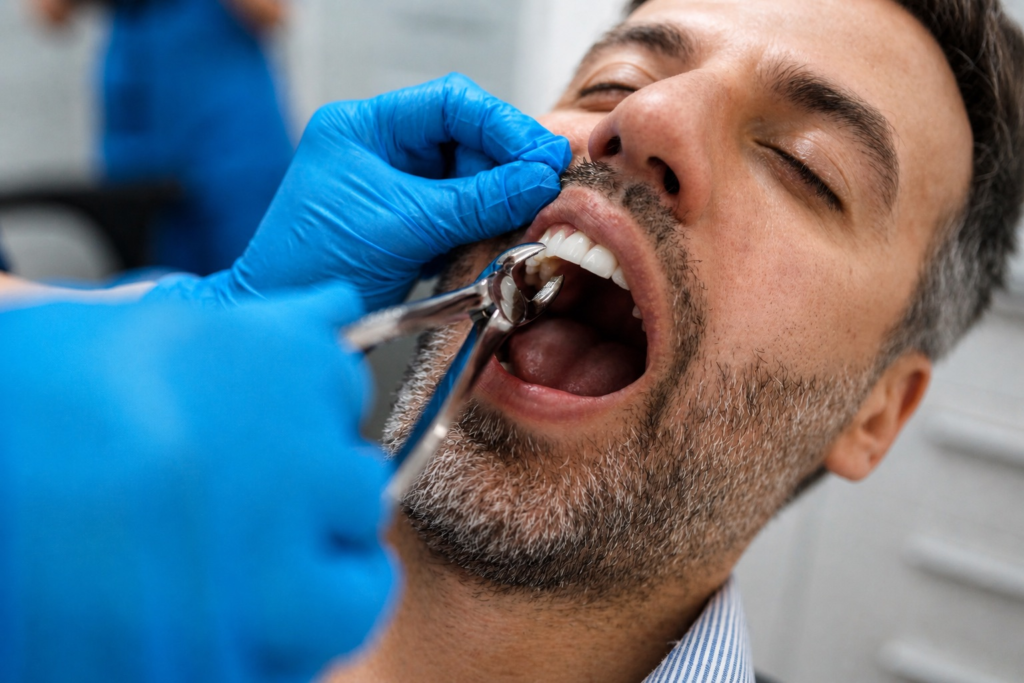
Performed when the wisdom tooth has fully erupted above the gum line. Under local anesthesia, the tooth is loosened and removed with dental forceps, similar to a standard tooth extraction. Most patients recover quickly, returning to normal activity within 2 to 3 days.
Surgical Extraction
Required for partially or fully impacted wisdom teeth. Dr. Elzayat makes a small incision in the gum tissue, removes a minimal amount of bone to access the tooth, and sections the tooth when necessary for easier removal. The site is cleaned and closed with sutures. Comfortable sedation is available for all surgical cases. Most patients are surprised by how relaxed the experience is.
Dr. Elzayat uses Cone Beam 3D imaging to map root position, angulation, and proximity to the inferior alveolar nerve before every surgical extraction, the same imaging used by oral surgery specialists. Same-day appointments are available for urgent cases.

Why Choose A-Dental Center Instead of an Oral Surgeon?
Many patients assume they need a specialist referral for wisdom tooth removal. In most cases, they do not. Waiting weeks for an oral surgeon appointment when an experienced in-house dentist can handle the same case the same day is unnecessary, and often more expensive. Avoid worsening infection by getting treated immediately.
- No referral required: Dr. Elzayat handles simple and surgical cases in-house
- Same-day appointments: no weeks-long wait for a specialist; call (818) 593-0700
- USC-trained with 20+ years of clinical experience: ICOI Fellow credentialed in implant and oral surgery
- Advanced imaging on-site: Cone Beam 3D CBCT and digital X-rays in the same office
- Comfortable sedation options: nitrous oxide, oral conscious sedation, and IV sedation via our sedation dentistry program
- Transparent pricing from $150: clear quote before any work begins
- Most PPO insurance accepted: Delta Dental, Cigna, Aetna, MetLife, Guardian, and more
- Bilingual team: Se habla español
- Full-service follow-up care: if tooth loss occurs, we offer dental implants and All-on-4 restorations in the same office
Patients from Burbank and Studio City often visit us for same-day, comfortable sedation during impacted wisdom tooth removal. Complex cases involving unusual anatomy or significant medical history are carefully evaluated, and referrals are made only when genuinely warranted.

Sedation Options for Wisdom Teeth Removal
Dental anxiety about oral surgery is completely normal. Our sedation dentistry program ensures that anxious patients, patients having multiple teeth removed simultaneously, and patients with a strong gag reflex can have a comfortable, stress-free experience. Comfortable sedation is available for both simple and surgical extractions.
- Local anesthesia: standard numbing for all extractions; you remain awake but feel no pain
- Nitrous oxide (laughing gas): mild relaxation; wears off within minutes; you may drive yourself home
- Oral conscious sedation: prescribed medication taken before your appointment; you remain conscious but deeply relaxed; a driver is required
- IV sedation: deepest level of in-office sedation; available for complex or high-anxiety cases; a driver is required
Patients who choose comfortable sedation often report minimal memory of the procedure. If dental anxiety or the prospect of surgery concerns you, discuss your sedation options at your consultation.
Same-day appointments are available.
Recovery After Wisdom Teeth Removal
Most patients recover quickly: here is what to expect:
- Day 1 to 2: Rest, apply ice packs in 20-minute intervals, take prescribed or over-the-counter pain relief, eat soft foods only, avoid straws and smoking entirely
- Day 3 to 4: Swelling peaks typically and then begins to reduce; soreness is manageable with medication; gentle warm salt water rinses may begin
- Day 5 to 7: Most patients with simple extractions feel nearly normal; surgical cases may have mild residual swelling
- Week 2: Full recovery for the vast majority of patients; sutures dissolve or are removed at a follow-up visit
Dry Socket: How to Prevent It
Dry socket (alveolar osteitis) occurs when the protective blood clot in the extraction socket is dislodged before healing is complete. It causes significant throbbing pain and delays recovery. To prevent dry socket:
- Do not use straws for at least 48 to 72 hours
- Do not smoke or vape during recovery, nicotine dramatically increases risk
- Avoid aggressive rinsing or spitting for the first 24 to 48 hours
- Follow all aftercare instructions provided at your appointment
Symptoms of dry socket include severe throbbing pain, a bad taste in the mouth, a visibly empty socket, and pain radiating toward the ear. If you suspect dry socket, call our office immediately at (818) 593-0700. We offer same-day emergency appointments.
What to Eat After Wisdom Teeth Removal
Stick to soft foods for the first 3 to 5 days: yogurt, mashed potatoes, smoothies (no straw), scrambled eggs, soup (not hot), applesauce, soft pasta, and pudding. Avoid hard, crunchy, or chewy foods until the extraction site is fully healed.
⭐⭐⭐⭐⭐ “The doctor was very insightful and took the time to explain the root cause of my dental issues in a way I could understand.”
V.C.
Meet Your Dentist
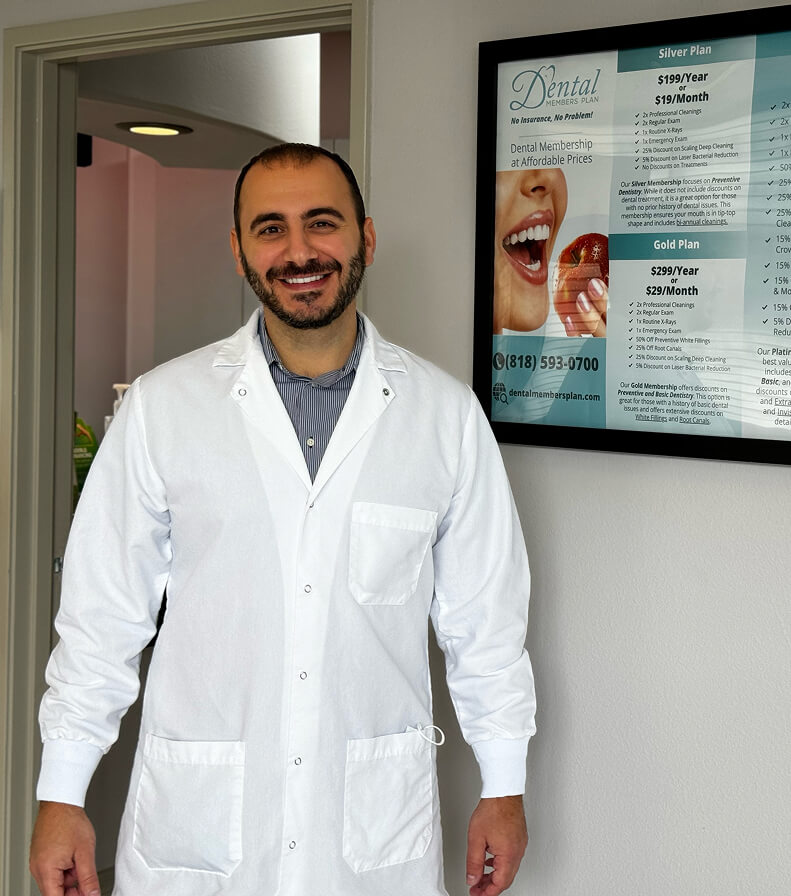
Meet Dr. Fadi Elzayat, DDS, FICOI
A-Dental Center has been a trusted part of the North Hollywood community since 1998. Dr. Fadi Elzayat has led the practice since 2008, bringing over 20 years of clinical experience in dental implants, All-on-4, full arch restorations, and comprehensive family dentistry.
A graduate of the USC Herman Ostrow School of Dentistry, one of the top dental schools in the country, Dr. Elzayat holds a Fellowship from the International Congress of Oral Implantologists (FICOI).
He focuses on cosmetic dentistry, with a strong emphasis on dental implants and advanced full-arch solutions. He performs every implant case personally and in-house, often utilizing Cone Beam 3D imaging for precision planning.
No referrals. No outside oral surgeons. Every phase of your treatment, from consultation to final restoration, is handled or supervised by Dr. Elzayat at A-Dental Center.
Beyond clinical skill, Dr. Elzayat is known throughout North Hollywood as “The Friendly Dentist” for his calm, straightforward approach, gentle technique, and zero-pressure consultations. A strong focus on comfort and clear communication ensures that each visit feels personalized and supportive.
Whether you haven’t seen a dentist in years or are facing a complex full arch case, patients from North Hollywood, Burbank, Studio City, and the greater San Fernando Valley are welcomed into a setting designed for a relaxed, judgment-free experience.
Credentials:
 USC School of Dentistry Graduate
 FICOI Fellow, International Congress of Oral Implantologists
 20+ Years Placing Dental Implants
 Bilingual, English & Spanish team
 ADA, CDA & San Fernando Valley Dental Society Member
What Happens If You Don't Remove Problematic Wisdom Teeth?
Don’t wait until swelling spreads. Impacted wisdom teeth that are left untreated do not improve on their own. Delaying removal increases the risk of:
- Spreading infection requiring antibiotics or hospitalization. Seek emergency dentistry before this point
- Permanent bone loss around the second molar
- Irreversible damage to neighboring teeth requiring additional extractions, dental implants, or All-on-4 restoration
- Cyst formation that destroys jaw bone
- Progressive gum disease in the back of the mouth
- Significantly more difficult (and expensive) surgery later
Early removal, when roots are not yet fully formed and bone is less dense, is almost always simpler, faster, and less expensive than waiting.
Most patients recover quickly when treatment is not delayed. Avoid worsening infection. Call us today.
What Our Patients Say
 Posted on Google
 Alex Petak
Trustindex verifies that the original source of the review is Google.
AmazingPosted on Google Isabel AlvarezSuch amazing and kind staff! I’ve had bad dental anxiety all my life, but I’ve felt the most calm and at ease here! Highly highly recommend!Posted on Google
 Pamela FarmerA-Dental Center , is one of the nicest staff I ever encountered. Dr Edmond, is very thorough and clear about any procedure that's needed. He explains from beginning to the end on exactly what needs to be done, gives clear options and is patient with his patients. The office is clean, attractive and high tech equipment. I feel a since of calmness when I arrive. I leave with a resolution and appreciate Dr.Edmonds services. I've referred all my friends and family as I trust his staff and his experience as a outstanding Dentist!Posted on Google
 DJ WhincopI had a broken tooth that started to give me constant pain. So I found a dentist through Zocdoc and this place looked the best! I went in and found out it was a baby tooth that had stuck around too long. They were amazing help. I am a low income individual and they talked through all the options of a “new tooth” with me. Every-time I came in for an appointment (four in total) I didnt have to wait long and they were very sweet and quick.Posted on Google
 DANIEL HWANGI’ve been coming to A Dental Center for years, and even though I live farther away now, I gladly make the drive because they’re simply the best dental office I’ve been to. The entire staff is always friendly, professional, and welcoming, and the office is consistently spotless. Every dentist I’ve seen has done an outstanding job, and my teeth always feel cleaner here than they have at any other dental office. They’ve also been incredibly helpful with my insurance, even though I’ve switched providers several times over the years, and scheduling appointments is always easy with their convenient text reminders. If you don’t have insurance, they also offer flexible payment options, which is a huge plus. I highly recommend A Dental Center to anyone looking for a trustworthy, caring, and professional dental office.
Does Dental Insurance Cover Wisdom Teeth Removal in North Hollywood?
Yes, most PPO dental insurance plans provide partial or full coverage for wisdom tooth extraction, particularly for impacted teeth. Coverage typically falls under the oral surgery benefit and may be subject to your annual deductible and yearly maximum. Medical insurance may also sometimes help cover complex surgical extractions depending on the patient’s policy.
A-Dental Center accepts most major PPO plans including:
- Delta Dental
- Cigna Dental
- Aetna Dental
- MetLife Dental
- Guardian Dental
- United Concordia
- Humana Dental
- Ameritas
- And most other major PPO carriers
Call us at (818) 593-0700 to verify your coverage before your same-day appointment, or learn more about insurance and financing options on our website.
Your Smile Is One Call Away
Same-day appointments. No pressure. No judgment. Just great dental care since 1998.
Call before 2PM for same-day appointments. Limited emergency slots available daily.
Should You Remove All Four Wisdom Teeth at Once?
When all four wisdom teeth require extraction, removing them in a single appointment is generally the most practical approach: one anesthesia session, one recovery period, and one disruption to your schedule.
With comfortable sedation, a single appointment is particularly practical.
Most patients recover quickly regardless of how many teeth are removed at once.
However, if only one or two wisdom teeth are problematic, Dr. Elzayat will recommend treating only those that require attention, not extracting teeth that are erupting normally and causing no issues.
The decision is always individualized based on your imaging, symptoms, and overall dental health.
FAQs
Wisdom Teeth Removal Frequently Asked Questions
How long does wisdom teeth removal take?
A simple extraction typically takes 20 to 40 minutes. Surgical removal of impacted wisdom teeth can take 45 minutes to over an hour. Removing all four at once avoids multiple recovery periods and is generally recommended when all require extraction. Same-day appointments are available at A-Dental Center. Call (818) 593-0700.
Is wisdom teeth removal painful?
The procedure is performed under local anesthesia so you will not feel pain during the extraction. Most patients experience mild to moderate soreness for three to five days after the procedure, managed with over-the-counter pain relief. Sedation options including nitrous oxide, oral conscious sedation, and IV sedation are also available for anxious patients.
How much does wisdom teeth removal cost in North Hollywood?
At A-Dental Center, wisdom teeth removal starts from $499. Surgical extraction of impacted wisdom teeth starts from $499 per tooth. An emergency exam is available for $45 with digital X-rays included if needed. Most PPO dental insurance plans cover wisdom tooth removal partially or fully. Call (818) 593-0700 to verify your coverage before your appointment.
What happens if I don't remove my wisdom teeth?
Impacted wisdom teeth left untreated can lead to recurring infections, damage to neighbouring teeth, cyst formation, bone loss, and progressive gum disease. In some cases, neighbouring teeth may require extraction and replacement with dental implants. Early removal, before roots are fully formed, is almost always simpler and less expensive than waiting.
How soon can I eat after wisdom teeth removal?
Soft foods are recommended for the first three to five days: yogurt, mashed potatoes, smoothies (no straw), scrambled eggs, soup, applesauce, and soft pasta. Avoid hard, crunchy, or chewy foods until healing is complete. Hot liquids and straws should be avoided for the first 24 to 48 hours to protect the healing blood clot.
Can impacted wisdom teeth cause headaches?
Can wisdom teeth cause bad breath?
Is wisdom tooth pain a dental emergency?
What happens if impacted wisdom teeth are not removed?
Can wisdom teeth damage nearby teeth?
What are the symptoms of an infected wisdom tooth?
What is pericoronitis?
Can wisdom teeth cause ear pain?
Can wisdom teeth cause sinus pressure?
At what age should wisdom teeth be removed?
What sedation options are available for wisdom teeth removal?
Is IV sedation safe for wisdom teeth removal?
What is dry socket and how do I prevent it?
Dry socket (alveolar osteitis) occurs when the protective blood clot in the extraction socket is dislodged before healing is complete, exposing bone and nerves and causing significant pain. To prevent dry socket: avoid straws for at least 48 to 72 hours, do not smoke or vape during recovery, and avoid aggressive rinsing or spitting for the first 24 to 48 hours. If you suspect dry socket, call A-Dental Center immediately at (818) 593-0700 for same-day emergency care.