| Quick Answer
Dry socket (alveolar osteitis) is a painful complication that can occur after a tooth extraction when the protective blood clot fails to form properly, dissolves, or becomes dislodged before the socket heals. The most common warning sign is severe pain that develops or gets worse during the first few days after an extraction instead of gradually improving. Other symptoms can include an empty-looking socket, visible bone, pain spreading toward the ear or temple, bad breath, and an unpleasant taste. If your pain is getting worse instead of better after a tooth extraction, contact your dentist. A-Dental Center provides same-day emergency dental appointments in North Hollywood when availability permits. Call (818) 593-0700. |
What Are the Symptoms of Dry Socket?
The most characteristic symptom of dry socket is severe pain that begins or becomes significantly worse within the first few days after a tooth extraction rather than gradually improving.
Common dry socket symptoms include:
- Severe or throbbing pain after tooth extraction
- Pain that becomes worse instead of better
- An empty or partially empty-looking tooth socket
- Visible whitish bone in the extraction site
- Pain that radiates toward the ear, temple, eye, jaw, or neck on the same side
- Bad breath
- A foul or unpleasant taste
This symptom list follows Mayo Clinic‘s clinical description of dry socket.
Some discomfort is normal after an extraction. The important difference is the direction of the pain.
| Normal Healing | Possible Dry Socket |
|---|---|
| Pain gradually improves | Pain becomes severe or gets worse |
| Blood clot remains in the socket | Socket may appear empty |
| Healing tissue gradually covers the socket | Bone may be visible |
| Mild tenderness is expected | Strong throbbing or radiating pain |
| No persistent foul taste or odor | Bad taste or bad breath may occur |
Important: You cannot diagnose dry socket from appearance alone. A dentist should evaluate significant or worsening pain after an extraction.
What Does Dry Socket Look Like?
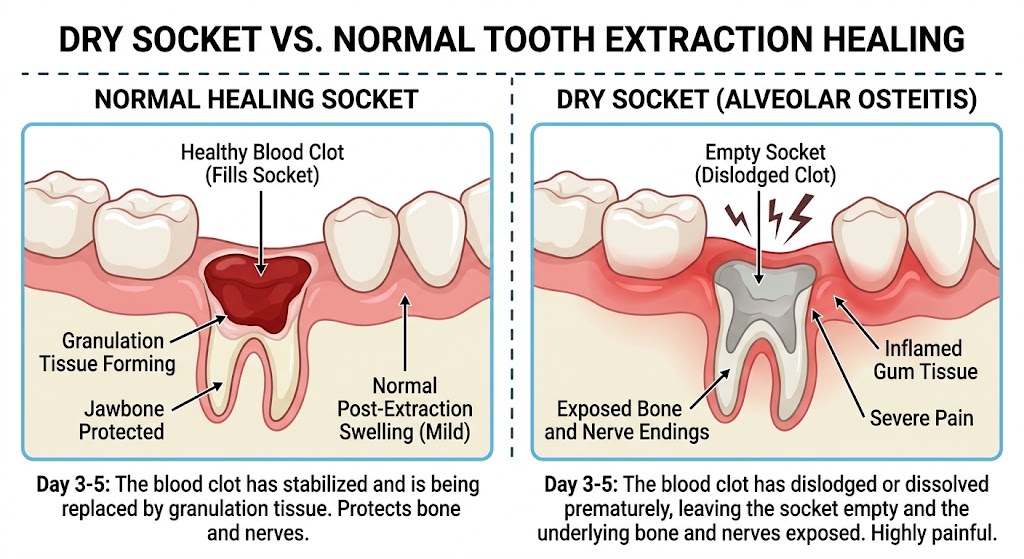
A dry socket may look like an empty or partially empty hole where the tooth was removed. In some cases, whitish bone may be visible at the bottom of the socket.
During normal healing, a dark blood clot typically protects the extraction site and is gradually replaced by healing tissue over the following one to two weeks.
Do not touch or probe the socket with your finger, tongue, toothpick, or another object to check whether the clot is present. Disturbing the area can delay healing and increase your risk of infection.
Appearance alone does not confirm dry socket. Pain pattern and a dental examination are what actually establish the diagnosis.
When Does Dry Socket Start?
Dry socket most often develops within the first three days after a tooth extraction, according to Cleveland Clinic, though Mayo Clinic notes pain can begin anywhere from one to three days after the procedure.
A more useful warning sign than counting days is watching whether your pain is improving or getting worse.
Normal post-extraction discomfort should gradually improve. With dry socket, pain often becomes significantly stronger and can radiate toward the ear, temple, jaw, or neck.
If significant pain develops or gets worse after your extraction, contact your dentist.
How Long Does Dry Socket Last?
Dry socket generally heals as new tissue forms over the exposed area, often within approximately seven to ten days, according to Cleveland Clinic.
Professional treatment does not instantly heal the socket, but it can substantially reduce pain while healing takes place.
Treatment may include gently flushing debris from the socket, placing a medicated dressing when appropriate, and recommending suitable pain control.
The exact recovery time varies according to the extraction and the individual patient.
What Causes Dry Socket?
Dry socket occurs when the protective blood clot at an extraction site does not form properly, dissolves too early, or becomes dislodged before sufficient healing occurs, according to Mayo Clinic.
Factors associated with increased risk include:
- Smoking or tobacco use
- Using a straw after extraction
- Vigorous rinsing or spitting
- Poor oral hygiene or not following aftercare instructions
- Difficult or surgical tooth extractions
- Wisdom tooth removal
- Estrogen-containing hormonal birth control
- A previous episode of dry socket
- Infection around the extraction area
Do not assume any single behavior automatically causes dry socket. These factors raise the likelihood of clot loss; they do not guarantee it will happen.
What Can You Do for Dry Socket at Home?
Home care may temporarily ease discomfort, but suspected dry socket should be evaluated by a dentist, especially when pain is severe or getting worse.
While you arrange dental care:
- Follow the post-extraction instructions your dentist gave you
- Use pain medication only as directed by your dentist or the product label
- Rinse gently with warm salt water once your dentist has told you rinsing is appropriate
- Drink plenty of water
- Avoid smoking and tobacco
- Avoid drinking through straws
- Avoid forceful rinsing or spitting
- Avoid placing objects or unapproved substances directly into the extraction socket
Do not attempt to pack or medicate the socket yourself.
A dentist can determine whether the problem is actually dry socket and whether irrigation, a medicated dressing, an X-ray, or another treatment is the right next step.
What NOT to Do If You Think You Have Dry Socket
These actions can irritate the area or interfere with healing. |
How Dentists Treat Dry Socket
Treatment focuses on controlling pain and protecting the extraction site while it heals.
Depending on the situation, a dentist may:
- Examine the extraction site
- Gently flush debris from the socket
- Take an X-ray if needed to rule out retained tooth fragments or other problems
- Place a medicated dressing when appropriate, sometimes containing eugenol or a numbing medication
- Recommend appropriate pain management
- Provide instructions for keeping the area clean while it heals
This approach follows treatment guidance from Cleveland Clinic and Harvard Health Publishing.
Many patients experience substantial pain relief after professional treatment, although the socket itself still needs time to heal.
| At A-Dental Center in North Hollywood, Dr. Fadi Elzayat evaluates post-extraction pain, dry socket, and other urgent dental problems.
Same-Day Emergency Appointments Available Call: (818) 593-0700 |
How to Prevent Dry Socket After a Tooth Extraction
Protecting the blood clot during early healing can reduce the risk of dry socket.
After an extraction:
- Follow your dentist’s post-operative instructions
- Avoid smoking and tobacco
- Do not drink through a straw during the period your dentist recommends
- Avoid vigorous rinsing and forceful spitting
- Eat soft foods during early recovery
- Chew away from the extraction site
- Keep your mouth clean according to your dentist’s instructions
- Do not touch or probe the extraction socket
Read our complete tooth extraction healing guide for a day-by-day explanation of what to expect after an extraction.
Can You Get Dry Socket After Wisdom Teeth Removal?
Yes. Dry socket is associated with tooth extraction generally, and it is more common after wisdom tooth removal than after routine extractions, since those procedures are often more involved.
The same warning signs apply:
- Pain that becomes worse instead of improving
- Severe throbbing pain
- Pain radiating toward the ear or temple
- Empty-looking socket
- Visible bone
- Bad taste or odor
Patients recovering from wisdom tooth removal should follow their post-operative instructions carefully and contact their dentist if pain becomes significantly worse during the first several days.
Our Wisdom Teeth Removal in North Hollywood team also covers same-day extraction, sedation options, and aftercare in detail. If you’re comparing costs, our wisdom teeth removal cost guide breaks down pricing by extraction type, and it’s worth asking about aftercare during your consultation, since impacted or partially erupted wisdom teeth need more careful clot protection than a simple extraction.
When Should You Call a Dentist After an Extraction?
Contact your dentist if:
- Pain becomes worse instead of better
- Severe pain develops during the first several days
- Pain radiates toward your ear, temple, jaw, or neck
- The socket appears empty or bone is visible
- You develop persistent bad breath or an unpleasant taste
- Pain medication is not adequately controlling your symptoms
- You are concerned that your extraction is not healing normally
Seek prompt medical or dental evaluation for:
- Significant facial swelling
- Difficulty breathing or swallowing
- Uncontrolled bleeding
- A high or persistent fever
- Pus or other signs of infection
Do not assume every case of severe post-extraction pain is dry socket. Infection, retained fragments, and other complications can produce similar symptoms; an urgent dental concern like this is worth a same-day call rather than a wait-and-see approach.
Dry Socket Treatment in North Hollywood
If you recently had a tooth removed and the pain is getting worse instead of better, A-Dental Center can evaluate the extraction site and determine the cause.

Dr. Fadi Elzayat, DDS, FICOI
- USC School of Dentistry graduate
- Fellow of the International Congress of Oral Implantologists
- 20+ years of clinical experience
- 700+ five-star reviews across Google and Yelp
- Same-day emergency appointments available
- English and Spanish-speaking team
| A-Dental Center
11335 Magnolia Blvd, Suite 1A North Hollywood, CA 91601 (818) 593-0700 Request an Emergency Appointment › Call (818) 593-0700 |
Frequently Asked Questions About Dry Socket
What are the first signs of dry socket?
The most important early warning sign is pain that becomes significantly worse instead of gradually improving during the first few days after an extraction. The socket may also look empty, and some patients develop radiating pain, bad breath, or an unpleasant taste.
What does dry socket feel like?
Dry socket commonly causes intense, throbbing pain at the extraction site. The pain may radiate toward the ear, temple, jaw, or neck on the same side.
What does dry socket look like?
The extraction site may appear empty or partially empty, and whitish bone may sometimes be visible. Appearance alone cannot confirm the diagnosis, so worsening or severe pain should be evaluated by a dentist.
How long does dry socket last?
Dry socket generally heals as new tissue develops, often within approximately seven to ten days. Professional treatment can help control pain while healing occurs.
Can dry socket heal on its own?
The socket can eventually heal as new tissue forms, but the pain can be significant. Dental treatment can relieve symptoms and also helps determine whether the problem is actually dry socket or another post-extraction complication.
Is dry socket an infection?
Dry socket and dental infection are not the same condition. Dry socket primarily involves loss or disruption of the protective blood clot and exposure of underlying tissue. However, infection and other complications can cause similar symptoms and should be ruled out when appropriate.
Can you get dry socket after wisdom teeth removal?
Yes. Dry socket is more common after wisdom tooth extraction than after many routine tooth extractions.
Can you get dry socket after a root canal?
No. Dry socket occurs in a tooth socket after a tooth has been extracted. A root canal treats a tooth that remains in the mouth.
Should I go to the dentist for dry socket?
Contact your dentist if pain becomes severe or worsens during the days after an extraction. A dentist can examine the socket, rule out other complications, and provide treatment to reduce pain.